Data Interoperability Guide For Medical Device Companies Planning to Align with 21st Century Cures Act

Data Interoperability Guide For Medical Device Companies Planning to Align with 21st Century Cures Act Avakash Dekavadiya Increased adaptation of technology has been driving the growth and innovation in the healthcare industry of the US. With equal efforts from organizations as well as government bodies, the reason why technology has been driving healthcare is to make healthcare patient-centric and patient-personalized. While MedTech and Digital Health innovators have been striving to create devices and healthcare solutions that provide continuous health monitoring and remote care applications, FDA, ONC, CMS, and other governing bodies have been working to make technology accessible for healthcare. For instance, the 21st Century Cures Act, Trump Administration’s MyHealthEData initiative, and ONC’s efforts to make healthcare data interoperable are all instances of how the government is driving the use of MedTech and digital healthcare solutions in healthcare. But, with increased facilitation also comes an increased need to validate your product, comply with stringent FDA regulations, and create truly interoperable solutions that can help amplify the reach of your medical devices and digital health solutions. Data Interoperability – the need of the hour: Talking about interoperability in healthcare, there has been a pressing need for EHR data interoperability under Trump Administration’s MyHealthEData initiative! Whether you are a payer, provider, or MedTech innovator, for increased adaptation of your technology, you will have to make your devices and ecosystems interoperable. Recent Government Announcements around Data Interoperability: ONC has identified HL7 FHIR Release 4.0.1 as the foundational standard to support data exchange Qualified Health Plan providers are required to implement and maintain a secure, standards-based API Hospitals to send electronic patient data to other practitioners for appropriate follow-up care For Medical Devices catering to Patients, CROs, Payers or Providers, they must ensure their data and cloud platform has EHR interoperability To create such an interoperable ecosystem and align your product with the 21st Cures Act, MedTech companies especially those wearable medical devices that wish to be a DaaS and care intelligence platform, they must establish data, cloud, and software fundamentals that help them become FDA certified and create truly scalable solutions. But to ensure compliance and interoperability in healthcare, below are certain challenges that Medical Device companies have to address: Compliance and Interoperability challenges faced by Medical Wearable Devices and MedTech companies: Compliance and Interoperability challenges faced by Medical Wearable Devices and MedTech companies: Inconsistent data and lack of standardized data structure Patient privacy and security while sharing data with open EHRs and interoperable systems Workflow alignment and lack of communication standards across EHRs Privacy and security enabling HIPPA compliant sharing poses significant challenge Patient ID Synchronization Regulatory and Compliance challenges: 510(k) and PMA challenges Cybersecurity challenges Continuous monitoring challenges QA Automation for accelerated and error-free deployments Approvals in Breakthrough Devices program for advanced FDA support and recognition De novo classification request for innovative solutions To overcome these challenges, MedTech must have one trusted MedTech digital enabler or compliance readiness partner that can help them create an effective digital ecosystem for their devices and data. Collaborating with an integration, compliance, and interoperability expert can provide the following benefits to MedTech and Medical Wearable Device innovators. The expertise of MedTech Healthcare digital partner that Medical Devices and MedTech companies and leverage: Validation and Verification Services- End-to-end partnership from defining and designing the data architecture to testing the solution data generation for optimum output, DaaS-oriented interoperability, and FDA compliance. Ensure whether you data is clean, usable, and accurate with our expert data engineers with in-depth expertise in MedTech. Experts can also provide effective testing around anticipated signal management and verify redundancy for software and hardware. During the SDLC, an expert MedTech V&V consulting will conduct traceability analysis, Interface Analysis, Criticality Analysis as well as Hazard and Risk Analysis. Data Transformation Enabler- For HL7 FHIR compliance and to make your device data truly accessible and interoperable, MedTech partner creates effective data structures, data management, and data transfer practices for devices, platforms, and the cloud. Device and Cloud Integrations- Help medical device and MedTech companies become a DaaS by creating HL7 FHIR-compliant data sets and segregating them in a manner that can be shared with Open EHRs and EMR systems as well as other data consumers such as payers, providers, patients, pharmaceuticals, CROs and clinical trial organizations. With the majority of players accessing AWS cloud infrastructure, experts can help you with Interoperability architecture that is built with the majority OOTB components of AWS and based on your use case and data type, they can also create data classifier, parser and AI Deep Learning based distributor that can be then linked to Medical Comprehend for standardization and distribution with user-specific APIs. Software Test Automation- For security readiness, error-free deployment and to create a secure and interoperable data ecosystem, MedTech engineering partner can provide end-to-end Device to Cloud QA automation capabilities with the right mix of automation models, tools, and frameworks. From identifying the right combination of manual and automation testing practices to selecting the right automation tools, automation engagement approach to complete programming implementation and post-implementation support, MedTech partner would provide personalized and custom-tailored test automation capabilities. Compliance and Regulatory Consulting- An experienced and domain expert MedTech compliance partner can ensure GMP, GCP, HL7, HIPAA, and HITRUST compliance for all your devices, digital health, and SaMD solutions. From creating HIPAA and HITRUST checklists to determining the cybersecurity readiness to threat modelling to device and software cybersecurity risk assessment reports, a partner would be a part of the compliance process right from the start and help you with documentation and testing reports that could expedite the process and validate FDA requirements. API Development- Share only relevant and user-specific data with your partners by developing robust APIs for seamless data exchange and interoperability. A good foundation builds a secure healthcare future: skip render: ucaddon_next_prev_post
Migrating to Liferay Enterprise Portal?
Here’s the Ideal Approach for Seamless Migration and Onboarding

Migrating to Liferay Enterprise Portal? Here’s the Ideal Approach for Seamless Migration and Onboarding Avakash Dekavadiya If we look at the Liferay positioning and adaptation over the years, while Liferay might not be a popular choice as CMS and portal solution, the platform has been popular amongst large enterprises that observe large traffic with global operations. Liferay’s enterprise edition has been an optimal choice for enterprises who wish to employ: Efficient document management Create personalized experiences for large audiences Create visible and traceable workflows Automate workflows Ensure complete content visibility and interoperability Dynamic and role-based content search and access And other such benefits that the platform provides to its enterprise clients with low-code and no-code architecture ensure accelerated go-to-market and absolute experience personalization for both the customers as well as the portal administrators and users. Understanding the fundamentals of Platform Migration in enterprises: When an enterprise with global operations, audience, and presence entails the journey of platform migration, there are a lot of considerations during the decision-making. With large enterprises and global operations, we also observe larger data sets, varied users, defined roles, and hierarchies. This means that migration enablers must ensure seamless data and document migration as well as create role-based access and permissions, personalized search functionalities and incorporate the latest market requirements for their enterprise clients. Thus, when we talk about migration from any platform like WordPress or SharePoint to the Liferay Enterprise portal, certain criteria and checklists need to be ticked to ensure seamless migration and onboarding. As a trusted Liferay Service Partner and our years of experience as a Liferay Migration Enabler for enterprises, our Migration Experts at AIMDek have created an ideal approach that we employ while embarking on the Liferay Migration journey. While we understand each journey is different and that it requires a personalized approach, below are some of our checkboxes and comprehensive service offerings that we offer to enterprises as their Liferay Migration Partner. AIMDek’s Approach to Liferay Enterprise Portal Migration: Understanding Source System Data: Before starting any migration process, our Liferay Migration experts perform a comprehensive analysis of the data structures, relationships, and permissions in the source such as WordPress and SharePoint. Collaborative Engagement: To ensure that the migration is not just technically successful but also aligned to business needs and goals, our migration team actively engages with stakeholders, and they extensively document the findings from system administrators and subject matter experts. While discussing migration we not only understand the technical requirements but also set the success criteria based on the business outcomes that our enterprise client expects post-migration. Mapping of Objects, Fields, and Permissions: We analyze the source system data structures, entity relationships, and field mappings and create a blueprint to replicate that on Liferay. Based on the analysis, we create a mapping strategy that aligns with the business requirements and ensure optimum data accuracy. We also perform data transformations and validations during the mapping process for optimum data integrity and compatibility between the source systems and Liferay. Reusing OOTB Modules: To ensure that the migration timeline is accelerated and that the customer can take a cost-efficient migration approach, for each case our approach is to look for available out-of-the-box (OOTB) modules in Liferay. Customization Options: While OOTB ensures cost and technical efficiency, we never compromise on the expected business outcomes. Thus, to achieve optimum business success post-migration we consider customizing the OOTB modules or developing custom mapping features if specific requirements cannot be met through existing functionality. User Experience Design: While designing we ensure that we provide a user-friendly and intuitive experience for the administrators and end-users involved in the data migration. During UX design we consider 2 possibilities; the first is where we consider the old workflows that the system users have been habituated to and try to replicate the same on Liferay for seamless transitioning and effective change management. On the other hand, while designing the customer-facing portals, we ensure that we incorporate functions and workflow in a manner that aligns with the current market trends and customer expectations. Leveraging Liferay APIs: Liferay is a preferred Enterprise portal due to its programming ability and utilities. AIMDek utilizes Liferay’s APIs to programmatically import the exported data into the platform, ensuring accuracy and data integrity. Also, since we deal with large data sets, we try and automate the entire data migration journey with custom utilities to avoid human errors and to ensure accelerated and accurate data migration. Lastly, we also perform necessary data transformations and mapping to align the exported data with Liferay’s data structure during the import process. Validation and Error Handling: To ensure that migration is completed as per the pre-set expectations, we implement robust validation mechanisms and error-handling procedures to ensure migration success. Our QA experts create a unique combination of automation scripts and manual functional testing to ensure that we provide an error-free and proficient Liferay Enterprise portal to our customers. Post-migration training and documentation: As the last stage of our migration process, we deploy qualified support staff for enterprises and help them train the Liferay users. For the administrators, we also provide detailed handover documentation which comprises functional, workflow, and technical specifications of their new and improved Liferay portal. Creating the right technical and business balance: A successful Liferay migration for enterprises is not just about technicalities for AIMDek. As Liferay Migration Partner, we ensure that we deliver the expected business outcomes, create optimum Liferay adaptability, and provide professional and support services that lead to effective change management. skip render: ucaddon_next_prev_post
Revolutionizing FDA Approval with AI: Accelerating MedTech Regulatory Compliance and Security

Revolutionizing FDA Approval with AI: Accelerating MedTech Regulatory Compliance and Security Avakash Dekavadiya Wearable Medical Devices and SaMD solutions are revolutionizing patient care across the world. With its power of remote and continuous patient monitoring, they have been helping healthcare providers, payers, CROs, Life Science organizations, and patient ecosystems. With each class of wearable medical devices and its increasing risks, Medical Device companies must adhere to different regulations set by the regulatory body FDA. The basic purpose of these regulations is to ensure that medical devices are safe for patients. But compliance and regulatory requirements for each class of devices are different. Wearable Medical Device companies have to set up Regulatory teams to create documents that need to be submitted to the FDA. Challenges in generating and publishing FDA compliance documents: Since medical devices directly affect the patient’s health and store critical information, there are many prelaunch and post-launch compliances that FDA has introduced. Due to the lengthy procedures and knowledge-intensive approach, FDA approval for medical devices is a big challenge, and many medical device companies get stuck in regulatory limbo due to the following challenges: Challenges faced by regulatory teams: Identifying and classifying the device Understanding and identifying device regulations and compliance requirements Putting together information and data for publishing Non-productive hours of Populating and formatting the documents Because of the lengthy process of FDA Compliance for MedTech and Medical Devices, the regulatory body has divided their approval process into the following 4 stages: Classify devices and understand regulations Select and prepare premarket submissions Send submissions to the FDA for review Comply with regulations post approval To help medical device companies expedite this process and to ensure error-free submission with accelerated time-to-market, they can employ generative AI and RPA capabilities. Below are the ways how generative AI and RPA can revolutionize the FDA Approval process. Use of Generative AI and RPA in all 4 stages of FDA compliance: Stage 1: Classify devices and understand regulations: There are 3 classes of wearable medical devices in the market: Class I devices are low-risk devices Class II devices are intermediate-risk devices Class III devices are high-risk devices that are very important to the health or sustaining life The compliance and regulatory requirements for each class of device are different. Your regulatory team must identify which class your wearable medical device falls in and the safety and data regulations that are relevant to your device. To accomplish this and to create a roadmap for generating and publishing these documents to FDA, you can employ your regulatory team with generative Copilot AIs to classify your product and to find the right information about safety and efficacy from large data sets. Stage 2: Select and prepare premarket submissions: Many wearable medical device companies that wish to sell in the US markets must submit a Premarket Application (PMA) to get FDA 510(k) cybersecurity approval premarket to ensure medical device cybersecurity readiness. Along with the application, they must provide the following documents: Threat modeling Device and software Cybersecurity risk assessment report Medical Device software security testing and assessment reports Complete vulnerability assessment for third-party software (if required) A detailed plan for continuing cybersecurity support These documents are to be prepared for each market and to accelerate this process, regulatory teams can use RPA to reduce the task redundancy and use AI to auto-populate forms. This also removes the possibility of human errors from the process and allows your regulatory team to focus on integral documents. Stage 3: Send submissions to the FDA for review: Before sending the documents to the FDA, you can use AI models to scan all the submitted documents and their content to detect inaccuracies and wrong information. AI can flag these contents and help you save time and effort for resubmissions. Sage 4: Comply with regulations: Cybersecurity in medical devices is one of the biggest problems that they face even today. With the use of AI, companies can enable continuous monitoring of devices and identify potential cyber threats as well as data breaches. Envision AI as a compliance enabler: To put things in a nutshell, all we have to do is think of AI as an enabler and use its generative, predictive, or process automation capabilities to convert your challenge into an opportunity. We at AIMDek help MedTech companies with AI-driven automation and deploy experts that can help them introduce the power of AI in each stage of the product lifecycle. skip render: ucaddon_next_prev_post
Comparing the Cloud Computing Biggies – Microsoft Azure v/s Google Cloud

Comparing the Cloud Computing Biggies – Microsoft Azure v/s Google Cloud Avakash Dekavadiya Cloud computing service has become an essential part of modern businesses, allowing them to build, deploy, and manage applications and services in the cloud. Microsoft Azure and Google Cloud are two most popular cloud computing platforms available today, offering a wide range of services and features helping businesses with their cloud computing needs. Before we begin, let us take a brief closer look at the similarities and differences between these two. Both Microsoft Azure Cloud Services and Google Cloud Computing Platform offer a comprehensive suite of services and features for building, deploying, and managing applications and services in the cloud. These include compute, storage, networking, databases, analytics, artificial intelligence, and more. However, the specific services and features offered by each platform vary a lot. Microsoft Azure Cloud has a strong focus on Windows applications and services, offering support for a wide range of Windows-based technologies, such as .NET, Visual Studio, SQL Server, and Active Directory. Microsoft Azure tools do include App Service, Azure Functions, and Azure Container Service. Google Cloud, on the other hand, has a strong emphasis on machine learning and data analytics with services such as BigQuery, Dataflow, and Tensorflow. Google Cloud tools do include Google Kubernetes Engine and App Engine. Cloud Services and Offerings Cloud Services and Offerings need to be considered when choosing a cloud computing platform., we will explore their cloud services and offerings in detail. Computation: Both platforms provide a range of compute services, including virtual machines (VMs), containers, and serverless computing. Microsoft Azure offers Azure Virtual Machines, Azure Kubernetes Service (AKS), and Azure Functions for serverless computing, while Google Cloud offers Google Compute Engine, Google Kubernetes Engine (GKE), and Google Cloud Functions. Storage: Both platforms offer various storage options, including block storage, object storage, and file storage. Microsoft Azure provides Azure Blob Storage, Azure File Storage, and Azure Disk Storage, while Google Cloud offers Google Cloud Storage, Google Cloud Filestore, and Google Persistent Disk. Networking: Both offer robust networking services, including virtual networks, load balancing, and firewall services. Microsoft Azure provides Azure Virtual Network, Azure Load Balancer, and Azure Firewall, while Google Cloud offers Google Virtual Private Cloud (VPC), Google Cloud Load Balancing, and Google Cloud Armor. Database: Both offer a variety of database services, including relational databases, NoSQL databases, and data warehousing. Microsoft Azure provides Azure SQL Database, Azure Cosmos DB, and Azure Synapse Analytics, while Google Cloud offers Google Cloud SQL, Google Cloud Datastore, and Google BigQuery. Analytics: Both platforms offer a range of analytics services, including big data analytics, data visualization, and machine learning. Microsoft Azure provides Azure HDInsight, Azure Stream Analytics, and Azure Machine Learning, while Google Cloud offers Google Cloud Dataproc, Google Data Studio, and Google Cloud AI Platform. Internet of Things (IoT): Both platforms provide IoT services, including device management, telemetry, and analytics. Microsoft Azure offers Azure IoT Hub, Azure IoT Central, and Azure Stream Analytics, while Google Cloud offers Google Cloud IoT Core, Google Cloud Functions, and Google Cloud Pub/Sub. Cloud Computing Architecture and Infrastructure Architecture and Infrastructure are two critical aspects for the businesses. Herein, we will explore their cloud computing architecture and infrastructure in detail. Architecture: Both utilize a hybrid cloud model combining public and private cloud infrastructure. Both platforms also offer a range of deployment models, including Infrastructure-as-a-Service (IaaS), Platform-as-a-Service (PaaS), and Software-as-a-Service (SaaS). While Microsoft Azure has a strong focus on Windows-based applications and services, Google Cloud has a strong focus on Linux and open-source technologies. Infrastructure: Both have the extensive global infrastructure to provide businesses with high-performance computing and low-latency data access. Microsoft Azure operates in over 60 regions, while Google Cloud operates in over 20 regions. Both platforms also provide a range of tools and services to manage and monitor infrastructure, including Azure Resource Manager and Google Cloud Console. Networking: Both provide robust networking capabilities to connect applications and services across multiple regions and data centers. Microsoft Azure offers Azure Virtual Network, Azure Load Balancer, and Azure Firewall, while Google Cloud offers Google Virtual Private Cloud (VPC), Google Cloud Load Balancing, and Google Cloud Armor. Both platforms also offer private connectivity options, such as Azure ExpressRoute and Google Cloud Interconnect. Security and Compliance Security and compliance are two critical aspects businesses need to consider when choosing a cloud computing platform. Herein, let us look at where they differ. Security: Both offer robust security measures to protect business data and infrastructure. Microsoft Azure provides a range of security services, including multi-factor authentication, identity and access management, and encryption options for data in transit and at rest. It also provides advanced threat detection and monitoring services through Azure Security Center. Google Cloud also offers multi-factor authentication, identity and access management, and encryption options for data in transit and at rest. It also provides advanced threat detection and monitoring services through Google Cloud Security Command Center. Both platforms offer security certifications such as SOC 2, ISO 27001, and HIPAA. Compliance: Both offer a range of compliance certifications and attestations. Microsoft Azure has a strong focus on compliance, providing more than 90 compliance certifications, including SOC 1, SOC 2, ISO 27001, HIPAA, and GDPR. It also provides compliance reporting and auditing services through Azure Compliance Manager. Google Cloud has a strong emphasis on its Zero Trust security model, providing a range of compliance certifications such as SOC 1, SOC 2, ISO 27001, HIPAA, and GDPR. It also provides compliance reporting and auditing services through Google Cloud Compliance Manager. Data Protection: Both offer a range of data protection features, including data encryption, data loss prevention, and backup and recovery services. Microsoft Azure provides encryption at rest and in transit, data loss prevention through Azure Information Protection, and backup and recovery through Azure Backup. Google Cloud provides encryption at rest and in transit, data loss prevention through Google Cloud Data Loss Prevention, and backup and recovery through Google Cloud Backup and Google Cloud Disaster Recovery. Identity and Access Management: Both offer identity and access management
Easing the Dynamics in Insurance Business with the use of Microsoft Dynamics 365
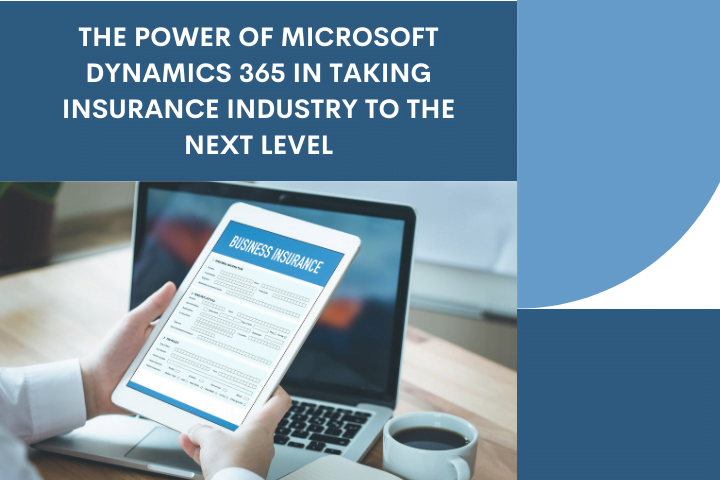
Easing the Dynamics in Insurance Business with the use of Microsoft Dynamics 365 Avakash Dekavadiya Are you looking to automate insurance business operations and improve the overall customer experience? Microsoft Dynamics 365 for Insurance might be the solution you need! With its cloud-based ERP and CRM applications, Microsoft Dynamics 365 offers a range of solutions designed to help insurance companies optimize their business processes, increase efficiency, and deliver exceptional customer service. Gone are the days when manual tasks, such as data entry, policy generation, and claims processing, would take up a significant amount of your team’s time and effort. With Microsoft Dynamics 365’s robust automation tools impacting digital transformation in Insurance, you can now streamline your operations and automate workflows, approvals, and other routine tasks, thereby reducing errors and increasing efficiency. Benefits of Microsoft Dynamics 365 in Insurance Delivering exceptional customer service is the key to success in the insurance industry. With Microsoft Azure in Insurance, you can provide a 360-degree view of your customers, enabling your agents to deliver personalized service that meets the unique needs of each customer. By providing a seamless and personalized customer experience, you can increase customer loyalty and satisfaction. One of the most significant benefits of being a Microsoft gold partner and using Microsoft Dynamics 365 is its reporting and analytics tools. With its range of tools, you can gain valuable insights into your business operations, customer interactions, and financial performance. These insights can be used to identify trends, track key performance indicators, and make data-driven decisions that can improve your overall performance and profitability. Microsoft Dynamics 365 increases your agility and respond quickly to changing market conditions and customer needs. Its flexible, cloud-based solution can be easily customized to meet your unique business needs, enabling you to launch new products, enter new markets, and adapt to changing customer demands quickly and efficiently. Security is always a top priority, especially when dealing with sensitive customer data. Microsoft Dynamics 365 provides a high level of security, with built-in safeguards to protect sensitive customer data. The platform is compliant with a range of industry standards and regulations, including GDPR and HIPAA, ensuring a business can meet its legal and regulatory requirements. Customer Experience Are you tired of customers leaving your insurance company due to poor customer experiences? As a Microsoft consulting partner, we understand Microsoft Dynamics 365 can help enhance your customer experience and keep your customers coming back for more! A 360-Degree View of the Customer: Gain a complete view of your customers, enabling you to deliver personalized service that meets their unique needs. By accessing customer data from a centralized location, your agents can provide tailored service that can help build trust and foster a strong relationship with your customers. Faster Claim Processing: Automation tools can help streamline your claims process, reducing the time it takes to process claims and improving the overall customer experience. Claims can be submitted online, and the platform can automatically route claims to the appropriate team members for review and processing, leading to faster claim resolution. Self-Service Options: Customers today want to be in control of their insurance needs, and Microsoft Dynamics 365 provides self-service options that allow them to manage their policies, view their claims history, and submit claims online. This not only saves time but also provides customers with greater control over their insurance needs, leading to a more positive experience. Personalized Communication: Personalize communication with your customers, using data from customer interactions to tailor messages and promotions to their needs. This can help improve engagement and foster a stronger relationship between your company and the customer. Faster Response Times: This enables your agents to respond more quickly to customer inquiries, providing faster resolutions to issues and enhancing the overall customer experience. By tracking and managing customer interactions from a centralized location, agents ensure inquiries are handled promptly and efficiently. Claims Management Is it tedious and time-consuming to manage insurance claims? Microsoft Dynamics 365 help streamline claims management process and improve the customer experience! Automated Claim Intake: By automating your claim intake process with Microsoft Dynamics 365, you can reduce the time it takes to process claims and eliminate errors that can lead to delays. Your customers can submit claims online, which can be automatically routed to the appropriate team members for review and processing. Centralized Claim Management: Manage all claims in one centralized location, enabling your agents to access all necessary information in one place. This not only saves time but also reduces errors, enabling your team to provide more personalized service to your customers. Real-Time Communication: This provides real-time communication tools that allow your agents to communicate with customers, other team members, and third-party vendors, ensuring that everyone is on the same page and that claims are processed as quickly as possible. Data Analysis: Provides robust data analysis tools to enable you to identify trends and patterns in claims data. This can help you make data-driven decisions and identify areas for improvement, leading to a more efficient claims management process. Faster Claim Resolution: Reduces the time it takes to process claims and improves the overall customer experience. Faster claim resolution leads to happier customers and a better reputation for your business. Integration with Legacy Systems Tired of using multiple software systems to manage your insurance operations? Microsoft Dynamics 365 can seamlessly integrate with your current insurance systems, providing a unified platform for your business. API Integration: Microsoft Dynamics 365’s API integration, you can easily connect it with your current insurance systems. APIs allow different systems to communicate with each other, enabling data to be shared and processed between systems. This can help streamline your operations and reduce manual processes. Custom Connectors: If you’re looking for a more efficient way to integrate your systems, custom connectors can be developed to enable data exchange between Microsoft Dynamics 365 and your current insurance systems. This can provide a seamless user experience for your agents and reduce the risk of errors and delays. Power Automate: Microsoft Power Automate can be used to automate workflows between Microsoft Dynamics 365 and your current insurance
Why Healthcare Should Use Salesforce as a Cloud CRM?
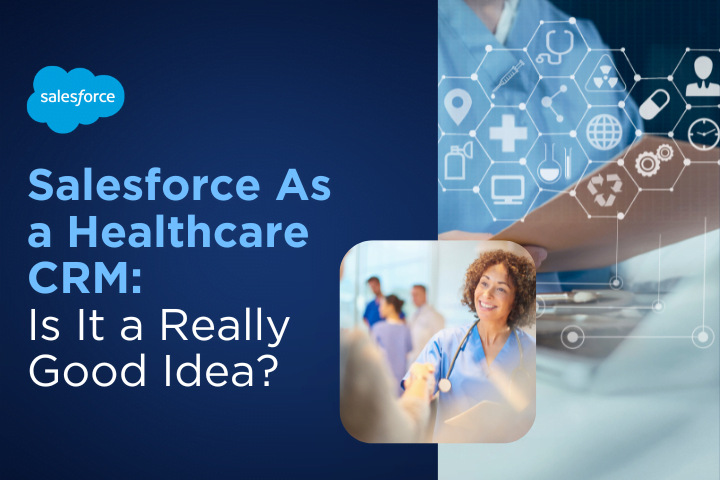
Why Healthcare Should Use Salesforce as a Cloud CRM? Avakash Dekavadiya According to a survey, 71% of healthcare providers use CRM to manage patient relationships, 69% use CRM to improve patient engagement, and 66% use CRM to manage referrals and care coordination. The healthcare industry has traditionally been slow to embrace technological innovation. However, with the rise of patient-centric care, increased demand for transparency and data-driven decision-making, and additionally a need to manage the growing complexity of healthcare, the industry has begun to turn to Customer Healthcare CRM Implementation. If you look around globally, CRM is typically associated with sales and marketing functions in other industries, but it is now becoming a powerful tool in healthcare as well. At its core, CRM is all about managing relationships, and in the healthcare industry, relationships are at the heart of everything. Healthcare completely relies upon about building trust, communicating effectively, and providing the best possible care, while a CRM helps to leverage everything from data, automation, and analytics to optimize operations, enhance patient engagement, and drive better outcomes. This is where Salesforce Health Cloud proves to be a game-changer in managing patient relationships, improving patient engagement, and enhancing overall healthcare experience, with all data on cloud and integrated in real time with a CRM on request. Before we get down to the actual discussion, we will explore why healthcare providers need a CRM, what’s Salesforce Cloud CRM, and what’s so special about Salesforce in transforming medical care. Why do healthcare providers need a CRM in the first place? CRM is the need of an hour in healthcare. Imagine, the treatments that can be given in real time with real time availability of patient records, or hospitals getting connected with one another for shifting of patients, etc. A CRM can work wonders in healthcare and let’s understand how! Patient Relationship Management A CRM system can help healthcare providers manage their relationships with patients, from initial contact through treatment and follow-up. With a CRM system, healthcare providers can collect and store patient data, track patient interactions, and gain insights into patient behavior and preferences. By doing so, providers can create a more personalized experience for patients, improve patient satisfaction, and enhance patient outcomes. For example, a CRM system can help healthcare providers send personalized reminders to patients for follow-up appointments or medication refills, and it can also provide patients with access to their medical records and other health-related information. Marketing Automation Healthcare providers can use CRM to automate their marketing efforts, including lead generation, lead nurturing, and customer retention. By leveraging data and analytics, healthcare providers can target specific patient populations and deliver personalized messages that resonate with patients. For example, a healthcare provider could use a CRM system to create targeted email campaigns that promote specific services or treatments to patients who have expressed interest in those areas. By doing so, healthcare providers can increase patient engagement and drive more revenue. Care Coordination A CRM system can help healthcare providers coordinate care across multiple providers and locations. By sharing patient data and treatment plans, healthcare providers can ensure that patients receive the best possible care and avoid unnecessary duplication of services. For example, a CRM system can help a primary care physician coordinate care with a specialist or a hospital, ensuring that the patient’s medical history, medications, and other relevant information are accessible to all providers involved in the patient’s care. Data Management and Analytics Healthcare generates a massive amount of data, from electronic health records to medical imaging to patient-generated data from wearables and other devices. A CRM system can help healthcare providers manage and analyze this data, providing valuable insights that can drive better decision-making and patient outcomes. For example, a CRM system can help healthcare providers identify trends and patterns in patient data, such as the effectiveness of a particular treatment or the impact of lifestyle factors on patient health. By doing so, healthcare providers can make data-driven decisions that improve patient outcomes and reduce costs. Compliance and Security Finally, a CRM system can help healthcare providers ensure compliance with regulatory requirements and maintain data security. In healthcare, data security is critical, as patient data is highly sensitive and must be protected at all times. For example, a CRM system can help healthcare providers ensure compliance with regulations like HIPAA, GDPR, and others. It can also provide data encryption, access controls, and other security measures to protect patient data from unauthorized access. By leveraging the power of these integrated platforms, marketers can take their customer care to the next level and build long-lasting relationships with their audience. If you’re a marketer looking to streamline your cross-channel strategies and provide tailored care and tools you need. Discover limitless possibilities of automated personalized marketing. Looking inside Salesforce CRM Salesforce CRM is a cloud-based software platform helping businesses manage customer relationships and interactions. It provides a single platform for managing sales, marketing, customer service, and other aspects of customer engagement. The platform offers a range of tools and features designed to help businesses improve customer engagement, streamline communication, and enhance overall customer experience. Why is Salesforce Cloud CRM so prominent in Healthcare? Salesforce has partnered with various healthcare organizations, including American Medical Association, American Heart Association, and Memorial Sloan Kettering Cancer Center, to develop solutions that improve patient care and engagement. Healthcare marketing is complex, with unique data models and privacy concerns. That’s why the versatile and scalable data structure of Salesforce Consulting Service is such a game-changer. Whether need a custom solution, agency outsourcing, or close collaboration with an internal IT department, Salesforce Cloud Services offers a consolidated platform for identifying target audiences, engaging them with personalized content, and tracking progress toward marketing objectives. And it’s not just marketing where Salesforce is changing the game. Healthcare providers are burdened with hours of data entry, pulling them away from patient care. Salesforce Healthcare CRM simplifies patient data management and analytic options, allowing providers to automate much of the data entry and spend more time caring for patients. Salesforce Healthcare offers