From Reactive Care to Proactive CVD Detection- AI Brings A Paradigm Shift in Cardiovascular Care
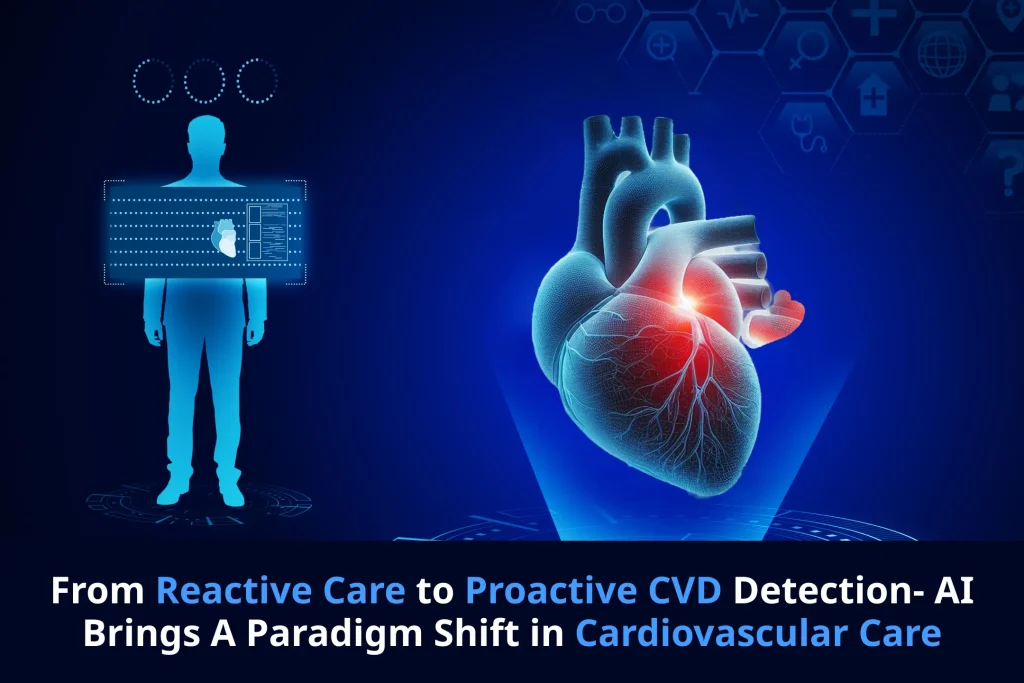
From Reactive Care to Proactive CVD Detection- AI Brings A Paradigm Shift in Cardiovascular Care Avakash Dekavadiya Cardiovascular Disease detection history: Cardiovascular diseases (CVD) and their health impacts are exponential on a person’s life. While some CVDs are chronic conditions that require extensive care and disciplinary lifestyle changes, many CVDs may lay dormant but can lead to fatal outcomes. Here are some recent global and US cardiovascular Statistics: More than Half a Billion people on the earth were affected by some form of cardiovascular disease (CVD) till 2023! Every second adult in the US has some form of CVD in 2024 (Report from AHA) CVD was the leading cause of death in the United States in 2020 Medical costs of CVD in the US are projected to triple from $272.5 billion in 2010 to. $818.1 billion till 2030! What are the care options? The traditional care solution for CVDs has been reactive care where on witnessing some symptoms or based on certain incidents, people went for a consultation and then on detection had to rely on medication and lifestyle changes. For high-risk patients and those dealing with chronic CVDs such as atrial fibrillation (AFib), Blood Pressure, and different types of arrhythmia, there were medical devices available to monitor and manage these conditions. Medical Devices and Their Role in Cardiovascular Care: While some medical devices, such as pacemakers, were available for preventing fatal outcomes post-CVD detections, there are many wearable wireless MedTech solutions for accurate Cardiac Monitoring. These devices were created to manage CVD symptoms and ensure patients get early alerts of rising health parameters that can lead to high-risk medical incidents. While these continuous monitoring cardiac medical devices have been successful in curbing CVD major and fatal incidents to some extent, they have no impact on CVD prevention. While looking at the above-mentioned statistics, it begs the question ‘Is CVD monitoring enough’? AI can bring a paradigm shift: If we look at the larger picture, the need of the hour in Cardiovascular care is the prevention of CVD from happening altogether! To change the CVD narrative from reactive care to preventive care, MedTech innovators are now leveraging AI solutions for the early detection of potential CVDs! AI-based MedTech start-ups across the world are working in this direction where the use of ECG, Blood Pressure, and Heart Rate datasets are coupled with deep learning ML and AI algorithms to identify dormant heart conditions and provide effective intervention and prevention of CVD. Rise of new SaMD solutions: To make this happen, MedTech innovators are running deep-learn ML on the data generated by the continuous monitoring devices along with patient history and observatory data to track trends and patterns in cardiac health data. These ML models are trained to identify health biomarkers and trends that can point to dormant CVDs and alert the users well in advance to take necessary health measures to avoid a fatal incident. As these ML models are capable of generating new health outcomes independently using device data and patient history, they can be classified as Software as a Medical Device and can function as an independent solution! Current AI-powered SaMD Use cases and overall progress: SaMD for early LEF detection: Currently, AI Algorithms are being developed to Detect Low Left Ventricular Ejection Fraction (LEF) which are positioned as breakthrough Software as a Medical Device (SaMD) to aid clinicians in detecting LEF earlier than ever. There is also a predictive AI solution that detects the early trend of increased cardiovascular risk, allowing diabetes patients to effectively manage cardiovascular complications leading to Diabetes Cardiovascular Comorbidities Prevention. Many ongoing AI solution studies are using wearable health data to detect cardiac arrhythmia before onset! These SaMD solutions hold great promise for Cardiovascular care: While these AI solutions emerge and become a part of cardiovascular care, AI in MedTech is still in its infancy. Many regulatory, and technical challenges need to be figured out to make these SaMD solutions a part of the care ecosystem. From regulatory assistance to PCCP-based V&V practices to Lab-as-a-Service for AI-powered SaMD development, we at AIMDek provide the required MedTech expertise to innovators and help them bring their novel breakthrough ideas to life with support from ideation to commercialization. skip render: ucaddon_next_prev_post
What’s next for the Vital Signs Monitoring Wearable Medical Devices in 2024 and Beyond?
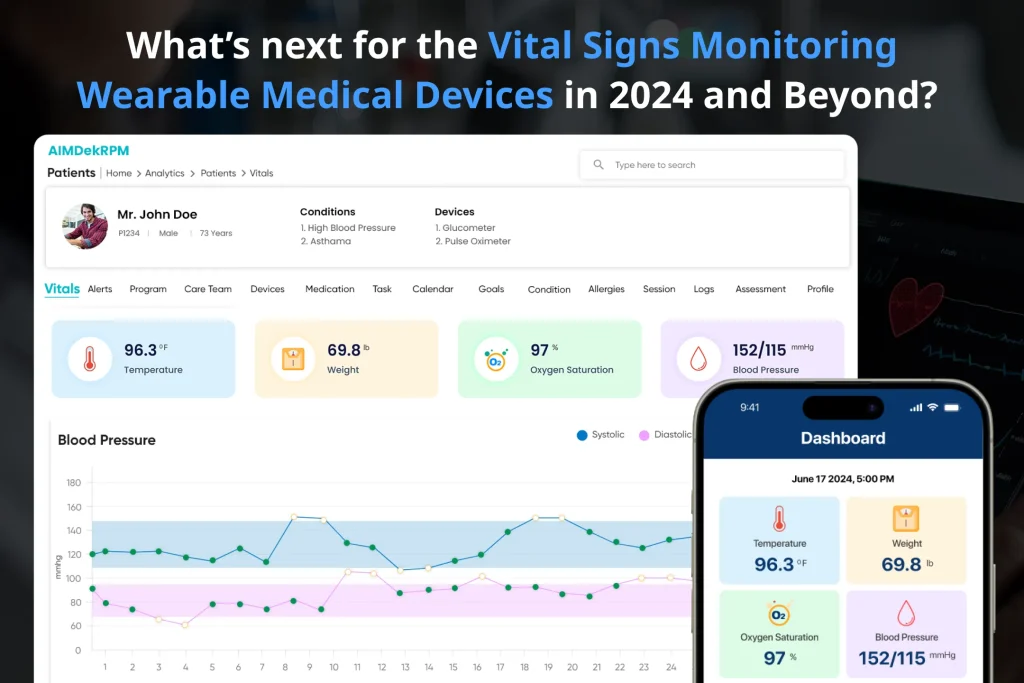
What’s next for the Vital Signs Monitoring Wearable Medical Devices in 2024 and Beyond? Avakash Dekavadiya Vital Signs Devices and their Evolution: If we look at the history and growth timeline of vital signs monitoring Medical Devices, they have received a lot of traction in the market because of their ability to provide continuous monitoring and ambulatory care. Because of their accuracy, they have now become a part of the care prescriptions from the providers for outpatient care programs such as at-home care and hospital-to-home care. This phenomenon became standard practice in the market after the onset of COVID-19. Medical Devices became a part of virtual care delivery as well as in-hospice care as the Healthcare Industry understood the significance of Remote Patient Monitoring and the users understood the need for preventive care along with the growing need to gain healthy lifestyle insights from devices that can generate medical-grade health data. Growing market demand also leads to an increased need for technical maturity: While the majority of these solutions were adapted for COVID-19 monitoring, they have now become a part of the virtual care ecosystem and are used for various chronic disease monitoring as well as ambulatory care devices after surgical treatments. But, increased demand has again put these RPM devices in turmoil and now, they are challenged with the following technical requirements: Increased demands for interoperability and data integration Creating Super Apps or Platforms with increased strategic partnerships that ensure not only detection but also allow for proactive interventions Create a global presence for their solutions by integrating their devices for countries and markets outside of the US Trajectory of increased interoperability and innovation: If we look at the recent trends and technical requirements of RPM devices, these changes suggest that they are led toward creating interoperable and integrated MedTech solutions! Here’s a deep dive into the trajectory of Vital Signs monitoring companies that have been shaping this paradigm shift: These changes will help them with the race to win acceptance from healthcare providers, clinical trials, CROs and payors. The result of interoperability again evolves Monitoring Devices into comprehensive care platform-centric solutions. Creating scalable platforms: Pioneering scalable and wearable medical-grade devices, while companies initiated their journey by focusing on continuous health monitoring, today, they have evolved into a comprehensive platform offering predictive analytics and actionable insights. Insights for Chronic Disease Prevention: As these devices get connected with smart AI-driven platforms, the data generated from these devices are also used for the prevention of medical hazards, especially for chronic diseases such as cardiovascular care, diabetes, blood pressure, sleep apnea and others. Strategic Partnerships for Capability Augmentation: Instead of limiting their monitoring capabilities to their devices, these companies are now also leveraging partnerships with other platforms and devices to create a comprehensive care system that can be adapted for better care delivery. Conclusion- integration leads to trusted and connected care delivery: Because of these changes made by the RPM device companies, they are now starting to see the following changes in the market: Acceptance from Healthcare Providers: Companies recognize that seamless integration with existing healthcare systems is crucial for widespread adoption. Payor Recognition: Companies are aligning their strategies to demonstrate not only the clinical efficacy of their devices but also the long-term cost-effectiveness and improved patient outcomes. Cost Justification: While users were concerned about the cost of medical-grade devices compared to consumer devices, integration of these devices with healthcare systems helped them justify the cost as they can gain better value from these devices and also get cost reimbursements with Medicare and Medicaid plans. skip render: ucaddon_next_prev_post
Glucose Monitoring Might End Its Battle with Needles and Pricks in 2024!

Glucose Monitoring Might End Its Battle with Needles and Pricks in 2024! Avakash Dekavadiya A brief history of available Glucose Monitoring Solutions: Blood Glucose is the gold standard in glucose monitoring. Because of this, users have been dealing with endless pricks and needles because of the limited Self Monitoring Blood Glucose (SMBG) Monitoring solutions. While regulated Continuous Glucose Monitoring solutions that provide glucose readings from Interstitial Fluid are available in the market, these solutions are also invasive and cost-intensive as the patches have an average of 7-14 days of replacement requirement. Although the cost of CGM devices can still be covered with Medicaid and Medicare programs, the need for patch replacements and the constant presence of the patch on users’ arms often leads to a lack of adaptation in the patients. An expected Turmoil: With novel CGM technologies emerging in the market, the glucose monitoring market might see an end to its decades-long battle with finger pricks in 2024! A new set of glucose monitoring solutions is emerging in the consumer market, providing Non-invasive continuous glucose monitoring (NICGM). These solutions and their potential to deliver continuous, discreet and real-time glucose monitoring can change the way users get their glucose readings. We might also see an accurate and medical-grade NICGM in 2024 as many such consumer CGM companies have embarked on the journey of FDA approval! What is a Non-invasive Continuous Glucose Monitoring solution? Majorly designed as wrist-based glucose monitors, these solutions use Electromagnetic Pulses, Optical Sensors and other novel sensors that can read glucose levels in the interstitial fluid without penetrating the skin. Has there ever been an FDA-approved NICGM? The efforts for introducing a NICGM were initiated in 2003 when companies like Pendragon Pendra and Cgynus Glucowatch got their FDA clearances. But both these companies were shut within a few years of commercialization as users faced problems of inaccurate results and lack of user-friendly designs! What are the changes? There is a unit of measurement that can determine the accuracy of CGM solutions called Mean absolute relative difference (MARD). MARD is calculated by comparing CGM sensor data with reference measurements across all subjects in a study. The collected measurements are then cross-referenced as the average of the absolute difference between the CGM values and the reference values and represented as a percentage average. If we look at the consumer NICGM in the market, the accuracy of CGMs has improved over the years due to technological advancements in sensor readings. Apart from that, many organizations have focused not only on NICGM but also on continuous monitoring, alerts, and discreet monitoring! What does it indicate? With millions invested and a few companies already enrolled in the FDA 510(k) clearance process, the wait for non-invasive CGM might end in 2024! While there are users that are already benefiting from consumer NICGMs; advent of regulated NICGMs can completely change the market dynamics and serve even the high-risk patients with medical-grade accuracy. skip render: ucaddon_next_prev_post
FemTech’s Design-Led Engineering Breaks Menopause Stigma, Leads to Increased Patient Adaptation!
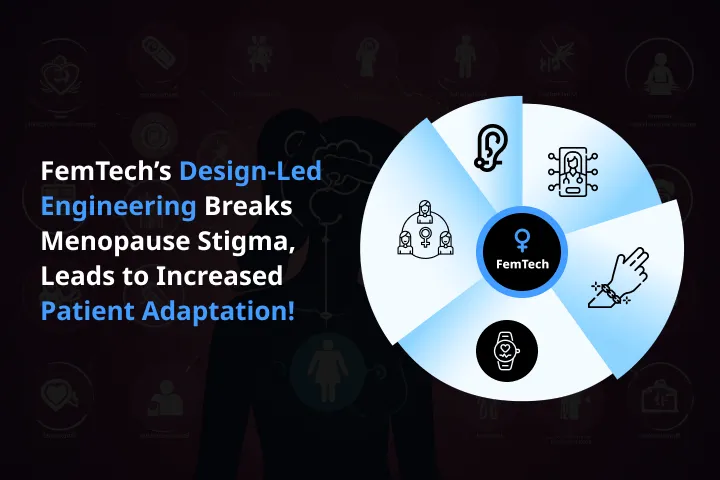
FemTech’s Design-Led Engineering Breaks Menopause Stigma, Leads to Increased Patient Adaptation! Avakash Dekavadiya Menopause is still a Taboo: Around 47 million women experience menopause each year and by 2030, the world population of menopausal and postmenopausal women is projected to increase to 1.2 billion! While Menopause is a natural process, many behavioral, psychological and physical changes happen during menopause which can adversely affect women, their health and their lifestyle. To help women manage these problems, there is a dedicated segment of menopausal care that many women can benefit from! But because of the stigma around the topic, studies reveal that women don’t seek medical help even though they need it! For instance, the following are some of the Menopause Care statistics from the US: Only 1 in 5 women in the U.S. receive a referral to a menopause specialist and out of that, only 60% of women seek medical attention. Moreover, of the women who seek help women 75% are left untreated! While one could argue that Menopause is not that major of a problem and that there are other non-medical ways to deal with the phase of life, studies show that in the U.S. 4 out of every 10 women said menopause symptoms interfered with their work performance and 17% of women said they had to quit the job or considered quitting due to menopause symptoms! The FemTech Solution- tackle patient behavior with Design-led engineering, virtual care devices and platforms! While Menopause is no longer a hush-hush taboo, lack of resources and privacy are still resulting in care reservations and negligence. To tackle this problem and to encourage women to take the right steps towards Menopausal care, FemTech converted patient bottlenecks into new ways of care delivery with design-led engineering of virtual care devices, SaMD and platforms. Medical Devices for Menopause Care: While there are many different kinds of medical devices available in the market for menopause care along with some SaMD solutions to manage symptoms such as Hot Flushes and others for menopause tracking, to ensure users adapt to these devices and make them a part of their day-to-day routine, FemTech innovators accessorized their devices for women! Although the devices were medical grade and had FDA clearances, they were designed as accessories such as Bracelets, Earrings, Rings and other such designs. With such designs, FemTech innovators ensured that women got the required medical treatment and continuous monitoring and that too in the most discreet way possible. While users wore the devices for Menopausal care and monitoring, for others it was just a stylish and fashion accessory that women wear in their day-to-day lives! Menopause Care Platforms: On one hand where devices are being accessorized, the menopause care platforms are designed for virtual care, support and communities for women! Right from doctor’s consultations to documentation for menopause care, pelvic physiotherapy sessions to online support communities and helplines for queries around menopause, the entire care ecosystem was established virtually so that women can seek help from the safety and comfort of their homes. User-centricity is the key to MedTech innovation: It is because of the FemTech innovators’ user-centric approach and design-led engineering, that they were not only able to increase patient adaptation of care systems, but they were also able to break the stigma around Menopause and help women live a healthy and normal life while they deal with Menopause. skip render: ucaddon_next_prev_post
Revolutionizing Continuous Monitoring Innovations: Evaluating AWS Solutions for MedTech
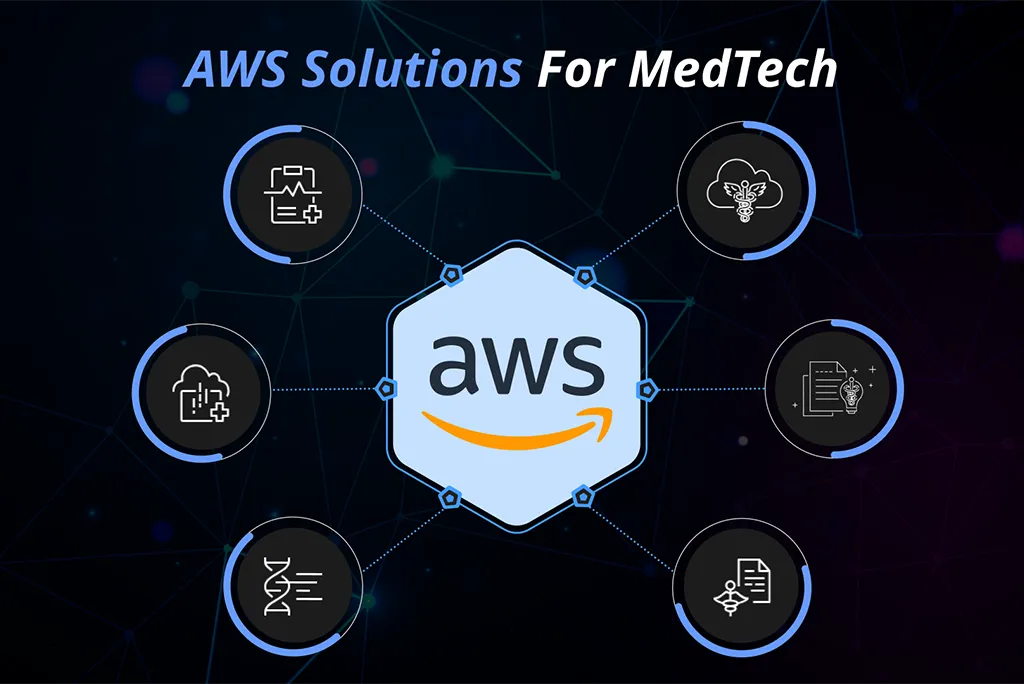
Revolutionizing Continuous Monitoring Innovations: Evaluating AWS Solutions for MedTech Avakash Dekavadiya In today’s rapidly evolving healthcare landscape, continuous monitoring devices play a pivotal role in patient care, providing real-time insights and improving clinical outcomes. However, managing and analyzing the vast amount of health data generated by these devices can be challenging, often limiting their full potential. Also, with the increasing competition, the need for compliance, and the urge to create integrated solutions that lead to optimum health data interoperability, medical device companies need to make informed and business goals-oriented decisions regarding their technology. But, these decisions are also surrounded by many controllable and uncontrollable factors such as: Continuous Monitoring Platforms and Their Struggles with Interoperability: Inconsistent data and lack of standardized data structure Patient privacy and security Lack of Communication Standards Across EHRs Research found that currently there are no healthcare interoperability standards intended for all providers across the United States! Also, in a survey by Gartner it was found that in the United States in 2022, almost 70 percent of digital health companies reported too many gaps when obtaining patient data from a third-party vendor. With the growing challenges and opportunities, Medical Device companies are adapting AWS solutions. AWS offers medical device companies the tools and capabilities to enhance device health data and better serve health providers. Let’s explore how AWS solutions can revolutionize continuous monitoring and drive innovation in patient care: 1. Automating Clinical Documentation with AWS HealthScribe Manual documentation processes can be cumbersome and time-consuming, diverting resources away from innovation and patient care. By automating clinical documentation with AWS HealthScribe, medical device companies can streamline workflows, reduce administrative burden, and accelerate time-to-market for new devices. HealthScribe empowers your team to focus on what matters most: developing innovative solutions that improve patient outcomes. By automating clinical documentation, medical device companies can enhance efficiency, reduce costs, and deliver value to health providers. 2. Deriving Insights from Device Health Data with AWS HealthLake Device health data contains valuable insights that can inform treatment decisions, optimize device performance, and drive product innovation. AWS HealthLake enables medical device companies to securely store, transform, and analyze device health data at scale, empowering them to derive actionable insights and deliver value to health providers. HealthLake unlocks the potential of device health data, allowing medical practitioners gain deeper insights into patient health and device performance. By analyzing data trends and patterns, they can identify opportunities for improvement, tailor our solutions to meet the needs of health providers, and drive better patient outcomes. 3. Advancing Remote Monitoring Solutions with AWS Healthmaging: Remote monitoring solutions are transforming patient care, enabling health providers to monitor patients remotely and intervene when necessary. AWS HealthImaging offers purpose-built storage and APIs for storing, analyzing, and sharing medical images in the cloud, empowering medical device companies to develop scalable and efficient remote monitoring solutions. HealthImaging revolutionizes remote monitoring, allowing us to deliver real-time insights and interventions to health providers. By leveraging cloud-native medical imaging applications, we can enhance patient care, improve clinical workflows, and drive innovation in remote monitoring. 4. Addressing Core Health IT Challenges with AWS Solutions Security, compliance, interoperability, and disaster recovery are critical concerns for medical device companies, particularly when managing sensitive health data. AWS offers a suite of core health IT solutions designed to address these challenges, enabling companies to operate securely and efficiently in a highly regulated industry. With AWS solutions, Medical Device companies can address core health IT challenges and focus on driving innovation in patient care. By leveraging purpose-built solutions on a trusted and secure cloud platform, they can enhance data security, ensure regulatory compliance, and improve operational efficiency. 5. Extracting Insights from Device Health Data with Amazon Comprehend Medical Extracting insights from device health data is essential for optimizing device performance, improving patient outcomes, and driving innovation in continuous monitoring. Amazon Comprehend Medical offers a HIPAA-eligible NLP service that automatically extracts health data from device-generated text, empowering medical device companies to unlock actionable insights and deliver value to health providers. Comprehend Medical transforms device health data into actionable insights, allowing Device Companies to optimize device performance and improve patient care. By leveraging NLP capabilities, they can identify trends, patterns, and anomalies in device data, enabling them to proactively address issues, tailor our solutions to meet the needs of health providers and drive innovation in continuous monitoring. There are many such Medical Device companies creating their MedTech solutions with the power of AWS. Not just that, even integration engines such as Redox, Rhapsody, and others have created their products using AWS. The inhouse AIMDek DaaS accelerator that we have developed is made using many AWS services and solutions. Looking to leverage AWS for your medical devices and want to optimize its value for MedTech? We at AIMDek can help you with strategic consulting in all aspects of cloud such as migration, cloud setup, AWS service selection, app development and others with our MedTech experience and expertise. To start your cloud journey, drop us an email at Marketing@aimdek.com skip render: ucaddon_next_prev_post
FemTech is Destigmatizing Menstruation and Making it Cornerstone of Women’s Heath
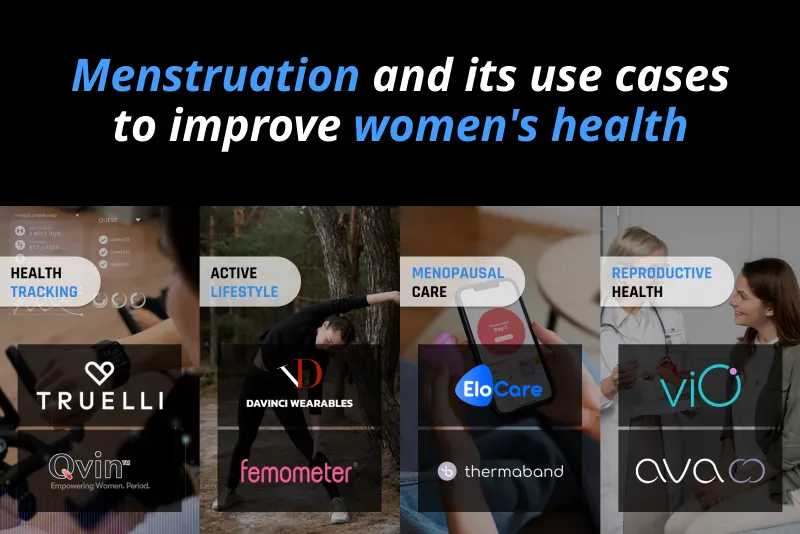
FemTech is Destigmatizing Menstruation and Making it Cornerstone of Women’s Heath Avakash Dekavadiya Busting the myths around menstrual blood: For generations, menstrual blood has been wrongly stigmatized as dirty blood or bad blood and it has been associated with many societal prejudices. In 2022 United Nations Human Rights Office of the High Commissioner (OHCHR) with WASH United said that 500 million women and girls didn’t have the things they needed to manage their periods safely, and hygienically. It was also observed that often women are shamed and embarrassed for menstruating. (Source) Women’s healthcare needs have long been ignored and up until 2014, it was not even a priority! For instance, when Apple Health went live in 2014, senior VP of software engineering Craig Federighi told users of their iPhone, “You can monitor all of the metrics that you’re most interested in.” But these metrics did not include period tracking! Menstrual Blood and FemTech- the cornerstone of understanding women’s health: FemTech industry with its overall women’s health revolution is also destigmatizing the taboos around menstrual blood. Not only are there many FemTech initiatives around educating women about their period cycle tracking, but menstrual blood has become a new goldmine of information about a woman’s health and well-being! From solving problems of sleep disorders and hot flashes during menopause to helping women attain peak performance and health hacks of an active lifestyle with period tracking, FemTech is changing the narrative around Menstruation. To understand how FemTech is changing the perspective around menstruation, here are 8 outstanding FemTech companies and their use cases around Menstruation: Health Tracking 1. Truelli: Truelli is the world’s first Menstrual pad that can scan your health! All women have to do is wear Truelli menstrual pad on their heaviest day of period, scan the back of the pad before disposing the pad and track vitals such as: B12 levels Vitamin D deficiencies Cervical Cancer triggers Hormonal Health Possible STDs 2. Qvin: Qvin is the first and only FDA-cleared menstrual pad scientifically proven to collect blood for lab testing. With the use of biomarkers and use of Qvin application, the pad can be used to collect menstrual blood and send it to the lab for personalized health data around: Hemoglobin A1C (currently available to measure blood sugar) Upcoming biomarkers: Thyroid Stimulating Hormone (Thyroid Health) C-Reactive Protein (levels of inflammation) Anti-mullerian hormone (For fertility and peri-menopause) Follicle Stimulating Hormone (Ovulation health) Luteinising Hormone (Indicates menstrual health) High-Risk Human Papillomavirus (For Cervical Cancer) Active Lifestyle: 3. Davinci Wearables: Intending to make period cycles a superpower for women, DaVinci Wearables tracks period cycles, bloating, and crucial aspects of female body physiology to provide women with valuable data that enables peak performance! With an AI-powered analytics engine designed for women, Davinci provides insights into bodily changes during crucial life phases, using activewear that connects to the Davinci platform. By integrating various wearables with their smart clothing, they deliver health outcomes actionable insights, and adaptive coaching. 4. Femometer: With menstrual health at the center of their offerings, the Femometer Smart Ring allows women to track various aspects of women’s health such as: Conception/ovulation health Menstrual or period health information Sleep tracking General Health Tracking They have created a smart ring that women are supposed to wear while they sleep and the ring collects data continuously overnight. The data can be synced with the app in the morning and it provides instant insights into cycle health. Menopausal Care: 5. Elo care: With the help of their ecosystem of the wearable, app and a platform, Elo Care provides an easy and effective way to record and interpret body data that can be shared with doctors to make informed decisions regarding menopause health. 6. Thermaband: With continuously monitoring wearable Zone and Thermaband Zone app, Thermaband is helping women manage their menopausal symptoms and also understand their menopausal journey. The Zone Device is designed to provide safe, discreet soothing warm, or cool sensations on demand. These sensations are automated and can also be manual to manage hot flashes, cold flashes, or night sweats. The Thermaband Zone App is designed to obtain menopausal insights and build a community that empowers women and clinicians to advance menopause healthcare with information such as: Frequency of discomforts during menopause Duration of hot or cold flashes Menopause problem triggers identification ALSO READ: Menopause Care “Devices & Virtual Care Platforms” + “Design-Led Engineering” is the key for “Increased Patient Adaptation”! Reproductive Health: 7. Ovu First: OvuFirst is a wearable fertility solution from viO HealthTech with their OvuFirst tracking device and OvuSense platform. The device is meant to be worn overnight and then the data will be synced with their OvuSense app. By understanding your ovulation patterns, OvuFirst will provide a full 8-day fertile window at the start of each cycle based on what the device learns about women’s unique patterns. 8. Ava Fertility: Hailed as the first and only FDA-cleared wearable fertility tracker in the US market, Ava is a wearable bracelet that women can wear to bed and sync the data into the application. With the use of physiological signals, the Ava fertility tracker identifies the menstrual phase that the user is in. It also tracks health parameters like temperature, sleep, physiological stress, and resting pulse rate. With all these vitals tracked, it helps users determine the 5-day fertile window to conceive a baby. FemTech’s Menstruation tracking- a transition from a stigma to becoming the landscape of women’s healthcare: With the use of medical devices, device companion apps, platforms, and support communities, FemTech is transforming the stigma around menstruation while simultaneously crafting a future where menstruation is given its due significance and used to understand women’s healthcare batter and to transform the care for women. ALSO READ: FemTech is not just a MedTech Category but an industry of its own! skip render: ucaddon_next_prev_post