FemTech App Development: Key Features, Tech Stack, Costs, and Compliance Considerations
FemTech App Development: Key Features, Tech Stack, Costs, and Compliance Considerations Priya Patel At first glance, a FemTech app may look similar to other health or wellness apps. It collects data, shows trends, sends reminders, and sometimes connects to devices. But once you look a little deeper, it becomes clear that building an app for women’s health is fundamentally different. Product teams must balance user experience, clinical responsibility, privacy, and scalability from day one. Women’s health products expand across fertility, pregnancy, menopause, chronic care, and diagnostics, FemTech apps are becoming core platforms that combine mobile experiences, data science, connected devices, and regulatory compliance. This guide breaks down what truly matters in FemTech app development, including essential features, recommended technology stacks, cost drivers, and compliance considerations you should plan for early. To explore what engineering initiatives AIMDek can help you, visit our page on FemTech & Women’s health engineering services. Key Features in FemTech App Development While feature sets vary by use case, most successful FemTech apps share a common foundation. 1. User Profiles and Health Context FemTech apps must support detailed, evolving user profiles, including: Age, reproductive stage, and medical history Cycle patterns, symptoms, and lifestyle inputs Pregnancy or menopause stage tracking where applicable This contextual data powers personalization and insights, but it also increases responsibility around privacy and accuracy. 2. Health Tracking and Data Visualization Core tracking capabilities often include: Cycle, symptom, or event tracking Trends over time rather than isolated data points Clear visualizations that are easy to interpret without medical training Designing these views requires close collaboration between UX, product, and clinical advisors. 3. Personalization and Insights Many FemTech apps offer predictive or recommendation-based features such as: Cycle or fertility predictions Symptom pattern recognition Personalized content or care suggestions It is critical to clearly position these insights as informational unless the product is cleared for clinical decision support. 4. Device and Wearable Integration Modern FemTech app development often involves: BLE-based wearable integrations Medical sensors for temperature, pH, HRV, or SpO₂ Data synchronization with third-party platforms Device reliability, calibration handling, and data validation become part of the app’s core responsibility. 5. Secure Communication and Engagement Depending on the product, this may include: In-app messaging or chat Telehealth features Notifications and reminders tied to health context Security and consent management must be built into every interaction. Technology Stack for FemTech App Development There is no single “best” stack, but proven patterns exist. Mobile Applications Native iOS and Android for performance-critical or regulated products React Native for faster MVPs and cross-platform consistency The choice depends on regulatory scope, device integrations, and long-term roadmap. Backend and APIs Node.js, Java, or Python-based services REST or GraphQL APIs for scalability Role-based access and audit logging built-in Backend architecture must support long-term data growth and compliance audits. Cloud Infrastructure AWS, Azure, or GCP with healthcare-ready configurations Encrypted storage and secure key management Regional data residency where required Infrastructure decisions directly impact compliance and cost. Data and Analytics Secure relational or time-series databases Analytics focused on trends, not raw exposure Monitoring for data drift, quality, and system health Data handling is often the most underestimated part of FemTech app development. If you are starting out on building something in FemTech, read our guide on Building FemTech Products: MVP to Scale. Compliance and Regulatory Considerations Compliance is not an add-on in FemTech. It shapes architecture, UX, and even feature scope. Key considerations include: HIPAA for handling protected health information in the US GDPR for user consent, data minimization, and deletion rights in the EU FDA guidance for digital health, wearables, and clinical decision support EU MDR implications if the app connects to regulated medical devices Even apps positioned as “wellness” must be careful not to cross regulatory boundaries unintentionally. Cost Considerations in FemTech App Development There is no fixed cost for building a FemTech app, but several factors strongly influence budget. Major cost drivers include: Depth of health tracking and personalization Device or wearable integrations Compliance and validation activities Data security and infrastructure setup MVP versus scale-ready architecture A lightweight MVP may focus on core tracking and UX, while a production-ready FemTech platform requires investment in quality, validation, and long-term maintainability. In general, an initial MVP app may cost anywhere between $20,000- $50,000 depending on above factors, whereas a complete end-to-end medical grade app with various integrations may cost $100,000 and upwards. There really is no single one-size-fits-all quote, but you can reach out to us with your requirement, and we can give you a quote with a free consultation call on your roadmap. Get a free roadmap consultation call + quote Common Challenges in FemTech App Development Teams often face challenges such as: Over-promising medical value without regulatory clearance Underestimating data privacy and consent complexity Scaling from MVP to a compliant commercial product Handling real-world device data inconsistencies Maintaining user trust over long engagement cycles Addressing these early reduces rework and regulatory risk later. How to Choose a FemTech App Development Partner When selecting a FemTech app development company, look beyond technical skills alone. Key evaluation criteria should include: Experience in women’s health or digital health products Strong understanding of compliance and quality frameworks Ability to integrate hardware, cloud, and mobile platforms A product mindset that supports long-term scale, not just MVP delivery FemTech products often evolve into regulated platforms. Your development partner should be prepared for that journey. Final Thoughts FemTech app development sits at the intersection of technology, healthcare, and lived experience. Success depends on building systems that are secure, trustworthy, and adaptable as regulatory and clinical expectations evolve. Teams that invest early in the right features, architecture, and compliance foundations are far better positioned to scale responsibly and sustainably. If you are planning a FemTech or women’s health app and want to validate your feature scope, tech stack, or compliance approach before building, a structured discovery phase can save significant time and cost later. Explore what AIMDek can do for your FemTech product Priya Patel Priya Patel is a MedTech, Digital health &
FemTech Categories: Menstrual, Menopause, Pregnancy, Reproductive Health, Cancer Detection
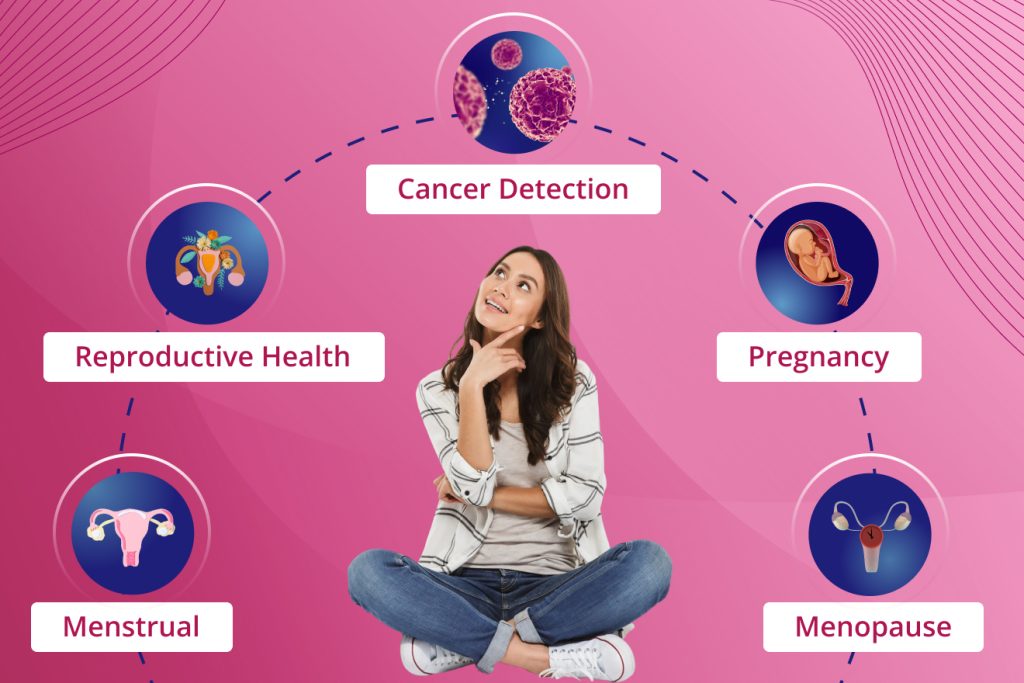
FemTech Categories: Menstrual, Menopause, Pregnancy, Reproductive Health, Cancer Detection Priya Patel FemTech isn’t one product category. It’s a set of health journeys that span life stages, risk levels, and care models. Women’s health innovation is often discussed across areas such as menstrual health, pregnancy and nursing, menopause, contraception and reproductive health, sexual and pelvic health, and other conditions that disproportionately affect women. This guide breaks down five core FemTech categories and shows how to translate each into a product strategy: what users actually need, what to build first, what data and integrations matter, and what quality and privacy expectations come with the territory. If you’re building an AI-enabled women’s health product, AIMDek supports FemTech & women’s health software and hardware development with design-led engineering for apps, platforms, devices, integrations, quality, and scale. Learn more by clicking here. Table of contents How to use this categories guide The shared building blocks across all FemTech categories Category 1: Menstrual health Category 2: Menopause Category 3: Pregnancy Category 4: Reproductive health Category 5: Cancer detection and screening support Choosing your wedge: a simple decision framework How AIMDek can help How to use this categories guide Each category section includes: Primary user jobs (what they’re trying to achieve) MVP scope (what to build first without overbuilding) Data and integrations (what improves outcomes and retention) Quality and trust risks (what can break trust fast) Scale path (what you add once retention is proven) The shared building blocks across all FemTech categories Even though the journeys differ, successful FemTech products usually share five foundations: 1) Trust-first UX for sensitive data FemTech products often touch intimate topics. Users expect clarity, control, and respectful design. Treat consent, privacy controls, and safe defaults as core product requirements. 2) A clear “track → interpret → act” loop Retention improves when users can do three things repeatedly: capture minimal, high-signal inputs see an insight they understand take a next step that feels safe and relevant 3) Interoperability readiness Modern women’s health products increasingly connect to wearables, labs, telehealth, and EHR ecosystems. Interoperability is becoming a growth lever, not an optional add-on. 4) Evidence and quality discipline that matches risk Not every FemTech product is regulated, but every FemTech product can cause harm if it is wrong, misleading, or leaks data. Your testing and validation posture should scale with risk. 5) Lifecycle thinking FemTech teams often start direct-to-consumer and then expand into partnerships. That transition is smoother when you build durable foundations early (security, monitoring, traceability habits). Category 1: Menstrual health What users want Understand cycle timing and variability Track symptoms and triggers without friction Feel confident about patterns without being misled Reduce anxiety and feel in control MVP scope that works Simple cycle and symptom tracking with high-signal inputs Clear cycle views and trend summaries “What might be influencing this?” prompts (not medical claims) Export/share summary for clinician conversations Data and integrations that matter Wearable context can improve insights and reduce manual burden (sleep, temperature trends, recovery). Wearables are becoming a major innovation area across women’s health categories. If you integrate wearables, design for incomplete data and show “last sync” and data completeness. Quality and trust risks Overconfident predictions that feel like medical advice Privacy harm from sharing or re-identification of sensitive data Poor UX around irregular cycles leading to churn Scale path Personalization by cohort (life stage, irregularity patterns, conditions) Support for related conditions (PCOS, endometriosis support journeys) Partner pathways: telehealth, coaching, labs Category 2: Menopause What users want Symptom understanding and normalization (“is this common?”) Personalized strategies (sleep, stress, nutrition, lifestyle, care navigation) Tracking that does not feel like work Confidence and support over months, not days MVP scope that works Symptom journal with low-friction inputs and trend views “Triggers and patterns” summaries with uncertainty framing Education modules that are staged by symptom cluster Habit and adherence loop with user-controlled reminders Data and integrations that matter Wearables for sleep and recovery context can reduce manual effort Partner integrations: coaching, telehealth, scheduling, content providers Optional clinician summary export Quality and trust risks Claiming outcomes you cannot support (“this will fix…”) Generic recommendations that feel invalidating Missing escalation cues for urgent symptoms Scale path Programs and cohorts (perimenopause vs postmenopause) Care pathways and referrals Population insights for partners (with privacy controls) Category 3: Pregnancy What users want Week-by-week guidance that feels reliable and calm Symptom tracking with clear “when to seek care” rules Appointment, test, and plan organization Support for partners and caregivers where relevant MVP scope that works Gestational timeline with personalized checklists Symptom tracking + safe escalation guidance Appointment and test reminders “Questions for my clinician” builder and exportable summary Data and integrations that matter Telehealth and messaging integrations (if you have care workflows) Lab result ingestion (partner or user-import lanes) Device and wearable integrations can help, but only if the value is clear Quality and trust risks High-stakes scenarios where wrong guidance can cause harm Inadequate escalation handling Reliability: downtime or lost data is especially damaging here Scale path Postpartum and nursing journeys (continuity) Care team portals (if you move toward provider partnerships) Interoperability expansion (EHR workflows, structured summaries) FemTech discussions often place maternal health and pregnancy care as central subsectors, which is also reflected in ecosystem taxonomies and market segmentation. Category 4: Reproductive health This category is broad. It often includes fertility, contraception, and reproductive system health support. Many overviews of FemTech explicitly include contraception and reproductive health as core areas. 1. What users want Help making decisions with clarity and confidence Tracking that supports a goal (trying to conceive, preventing pregnancy, cycle understanding) Reliable guidance on timing, symptoms, and next steps Pathways to care when needed 2. MVP scope that works Goal-based onboarding (TTC vs contraception vs “understand my body”) Minimal tracking model aligned to the goal Clear education plus uncertainty framing Care navigation: “when to seek help” prompts and resources 3. Data and integrations that matter Wearables can add context (temperature trends, sleep) Partner integrations with fertility clinics, labs, telehealth can be high leverage, but
Interoperability and Integrations for FemTech and Women’s Health

Interoperability and Integrations for FemTech and Women’s Health Priya Patel Interoperability is how FemTech products graduate from “a helpful app” to “a trusted part of a care ecosystem.” It is what enables a women’s health platform to connect to EHRs, labs, wearables, care teams, and partner tools, without building brittle one-off integrations that break every time something changes. This guide explains how to plan and implement interoperability for FemTech, with practical architecture patterns, HL7 FHIR basics, SMART on FHIR app launch concepts, wearable data considerations, and the operational habits that keep integrations reliable at scale. If you’re building or scaling a women’s health product, AIMDek supports FemTech & women’s health software and hardware development with design-led engineering for apps, platforms, devices, integrations, quality, and scale. Learn more by clicking here. Table of contents What interoperability means for FemTech Integration lanes: EHR, partners, wearables, and patient-controlled records HL7 FHIR in simple terms SMART on FHIR: a common path into EHR workflows Wearables and devices: the multi-wearable trend, and how to design for messy data Consent, privacy, and data-sharing controls Integration architecture patterns that scale Testing and monitoring integrations in production A practical roadmap from MVP to scale How AIMDek can help What interoperability means for FemTech In practice, interoperability is the ability to exchange health data with external systems in a way that is secure, standards-aligned, and robust enough for real-world workflows. For FemTech teams, interoperability typically drives: Easier onboarding (importing history instead of manual entry) Better personalization (richer context from devices and records) Partnerships (clinics, payers, employer programs, labs, telehealth) Continuity of care (sharing summaries and outcomes back to care teams) Interoperability is also being pushed forward by policy and ecosystem shifts in the US, including ONC’s Cures Act Final Rule that aims to improve “secure access, exchange, and use” of electronic health information. Integration lanes you will encounter Most FemTech products integrate in four lanes. You do not need all of them on day one, but you should design so you can add them without rewrites. 1) EHR integrations Used when you want data to flow between your product and a clinical record system. Common use cases: Importing meds, problems, allergies, labs, immunizations Writing back patient-reported outcomes or summaries (when allowed) Supporting clinician workflows via embedded apps 2) Partner integrations These are “ecosystem” integrations: labs, telehealth, coaching, scheduling, messaging, content providers, and payments. They often matter as soon as you introduce a care pathway or a partner-led distribution model. 3) Wearables and device integrations This is becoming a default expectation in modern FemTech. Cycle and symptom tracking apps are increasingly integrating with multiple wearable ecosystems so users can combine self-reported experience with passive biometrics (like temperature trends and sleep). Clue, for example, has documented wearable connections with Oura, Withings, Ultrahuman, and WHOOP, and describes syncing selected biometrics such as skin temperature trends and sleep duration. 4) Patient-controlled records on consumer platforms This lane can be valuable when you want a user-led import path that does not require direct contracting with a health system. Apple’s HealthKit clinical record support, for example, allows apps to read FHIR objects from the HealthKit store. HL7 FHIR in simple terms FHIR (Fast Healthcare Interoperability Resources) is an HL7 standard for exchanging healthcare information electronically. Think of FHIR as: A set of data models (“resources”) like Patient, Observation, Medication, Condition Implementation guides (IGs) that constrain FHIR for specific contexts A practical detail that matters: FHIR versions and “how strictly an implementation follows an IG” can differ across partners. Your integration plan should explicitly call out which FHIR version and IG(s) you support. SMART on FHIR: a common path into EHR workflows SMART on FHIR is widely used to launch third-party health apps with a standardized data layer (FHIR) plus modern authorization. The SMART App Launch specification describes use of OAuth2 scopes, and it also highlights that apps should minimize scopes to the minimum necessary. Many platform descriptions of SMART on FHIR also call out OAuth2 and OpenID Connect as part of the security layer for accessing clinical information. Why this matters for FemTech: You can embed your app inside a clinical workflow You can access patient context (so the app knows which record is in scope) You can use standardized, auditable authorization and scoped access Practical advice: do not build “generic SMART” first. Start with the EHR environments you actually need and maintain a compatibility matrix as you expand. Wearables and devices: the multi-wearable trend, and how to design for messy data FemTech platforms are increasingly designed as “wearable-friendly by default.” Instead of relying only on manual logs, products are integrating with rings, watches, and bands to enrich cycle insights with passive signals like temperature trends and sleep. The trend: multi-wearable support is becoming part of the product promise Clue is a strong signal of this shift. Its own wearable integration pages and support docs describe syncing selected biometrics from partners including Oura, Withings, Ultrahuman, and WHOOP, and specifically reference skin temperature trends and sleep duration as syncable biometrics. Clue’s Oura support documentation describes temperature data from the ring syncing into the Clue app, and shows that temperature trends are surfaced inside the app’s analysis/insights experience. WHOOP’s own partnership page also positions the integration as visualizing WHOOP sleep and temperature biometrics inside Clue cycle charts. Ultrahuman’s materials describe connecting Ultrahuman with Clue for biometric cycle tracking, and emphasize use of biosensor data (including temperature and sleep) alongside cycle insights. A second trend is also emerging: some FemTech brands are moving toward dedicated hardware to reduce dependency on third-party device ecosystems. For example, Natural Cycles has launched a wristband designed to work with its app, and public reporting describes it as capturing overnight signals to support the app’s fertility status output. Why this trend is accelerating Lower user effort: passive sensing reduces drop-off from daily logging Better personalization: biometrics add context that can make insights feel less generic Competitive expectations: users increasingly compare products based on what they can connect to, not just what they can
AI in FemTech and Women’s Health: Safe, Fair, Monitorable Systems

AI in FemTech and Women’s Health: Safe, Fair, Monitorable Systems Priya Patel AI is showing up everywhere in women’s health. But “adding AI” is not a strategy. In FemTech, the costs of overconfidence are real: privacy harm, unsafe guidance, biased performance across cohorts, and trust loss that is hard to recover. This guide is a practical blueprint for building AI features in FemTech that are useful, safe, fair, and monitorable, from MVP through scale. If you’re building an AI-enabled women’s health product, AIMDek supports FemTech & women’s health software and hardware development with design-led engineering for apps, platforms, devices, integrations, quality, and scale. Learn more by clicking here. Why AI in FemTech is accelerating A good way to understand momentum is to look at ecosystem signals. FemTech Analytics’ “AI in FemTech” hub positions AI as a major intersection point for women’s health and tracks a large global landscape of leaders, companies, investors, and R&D centers, organized across women’s health areas. At the same time, multiple industry and community perspectives point to AI’s growing role across fertility, pregnancy, menopause support, and detection use cases, while repeatedly flagging privacy, bias, and ethics as the constraints that will decide which products endure. Where AI actually helps in FemTech (use cases worth building) The most durable AI use cases in FemTech tend to fall into two categories: decision support (helping users and care teams make better decisions) and work reduction (reducing friction for users and clinicians). 1) Personalization that improves adherence (without being creepy) AI can make tracking and programs feel less generic: adaptive recommendations, habit support, content sequencing, and reminder timing. But the goal is not “more nudges.” The goal is better adherence with fewer interruptions, while respecting user control and privacy. 2) Pattern detection and risk signals (with strong guardrails) AI can help surface trends in symptoms, cycles, triggers, and behaviors. In higher-risk scenarios (pregnancy complications, urgent symptom patterns), a safe pattern is: detect early, escalate clearly, avoid false certainty. Some women’s health discussions highlight AI’s promise in earlier detection and proactive support, but the same sources emphasize the need for careful, evidence-based implementation. 3) Imaging and screening support (specialized, highly governed) Areas like breast health and cervical screening often involve ML models on images or signals. These are typically not “ship fast” features. They demand rigorous validation, careful cohort performance analysis, and a regulated mindset. 4) Fertility and IVF workflow assistance In fertility care, AI is used in places like embryo assessment and lab workflow optimization. Whether you build in this area depends heavily on your partnerships and the evidence you can generate, because the product sits close to clinical decision-making. 5) Menopause and longevity support Menopause products often benefit from personalization and ongoing coaching. AI can assist with symptom journaling, pattern recognition, and tailored education, but must avoid medical claims unless supported. 6) Conversational support (chatbots) for guidance and navigation GenAI can help users navigate content, reflect on symptoms, and prepare for clinician conversations. But chat is also where safety failures become obvious, so you need structured evaluation, guardrails, and escalation paths (more on that below). 7) Admin automation for care teams and operations Summarization, structured note creation, routing, and triage can reduce workload. In many products, these “boring” internal AI features are safer and more defensible than high-stakes user-facing medical guidance. Choose the right AI approach (most teams overreach) A simple decision that prevents a lot of future pain is to choose the minimum AI that solves the problem. Level 0: Rules and logic (often best for MVP) For many MVPs, rules-based logic is safer and easier to validate than ML. It also gives you clean baseline performance data. Level 1: Predictive ML (use when you have stable signals) Predictive models can work well for scoring, classification, and structured recommendations, but only when your data is high-qualiAty and representative. Level 2: Generative AI (use when language is the product surface) GenAI is powerful for conversational guidance, summarization, and personalization through language. WHO has published guidance focused on generative AI in healthcare, emphasizing governance, safety, and responsible deployment. A practical rule: the closer the output is to a medical claim or action, the more you should prefer constrained approaches, transparent logic, and human oversight. Data is the product (and it’s the biggest risk) FemTech and AI are inseparable from data. Multiple industry perspectives frame this bluntly: the value and impact of AI-driven women’s health products depends on data strategy and cross-disciplinary execution, not just algorithms. What “good data” means in FemTech Representative cohorts: across ages, life stages, geographies, and conditions Clear labeling and provenance: where did the data come from, how was it collected, what does it represent Bias-aware evaluation: performance should not collapse for specific groups Privacy-by-design: health data is sensitive by default, and FemTech products are under extra scrutiny The uncomfortable truth Women’s health has long had research gaps and under-representation. If your data mirrors those gaps, your AI will amplify them. Your advantage comes from being deliberate: what you collect, what you infer, and how you verify. A trust-first design blueprint for AI features Before you talk about models, design the “trust contract” with the user. 1) Be explicit about what the AI is doing Users should know whether a feature is: educational content a pattern summary a recommendation a risk signal a clinical decision support tool 2) Put user control and consent in the product, not in legal text This includes: opt-in/out controls for sensitive data uses control over personalization ability to export/delete clear handling of third-party tools 3) Design “safe language” by default Avoid false certainty. Use calibrated phrasing. In health contexts, overly confident language is a safety bug. 4) Build escalation paths If a user may be in an urgent situation, your experience must help them reach appropriate care. Do not rely on “a disclaimer” alone. How to evaluate AI safely (pre-launch) If you do nothing else, do this: treat evaluation as a product feature, not a QA afterthought. 1. Use an AI risk framework to structure your
Compliance and Quality for FemTech

Compliance and Quality for FemTech Priya Patel FemTech products deal with intimate, sensitive health data and high-trust user journeys. Compliance and quality are not checkboxes you add right before launch. They are product requirements that protect users, protect your brand, and make partnerships possible. This guide explains how to think about compliance and quality in FemTech from MVP to scale, including privacy, risk management, software lifecycle discipline, testing evidence, and operational readiness. If you’re building or scaling a women’s health product, AIMDek supports FemTech & women’s health software and hardware development with design-led engineering for apps, platforms, devices, integrations, quality, and scale. Learn more by clicking here. Table of contents Step 1: Clarify product intent and risk level Step 2: Privacy and consent as core product requirements Step 3: A practical quality system approach from MVP to scale Step 4: Risk management for FemTech products Step 5: Software lifecycle discipline and V&V evidence Step 6: Security baseline and incident readiness Step 7: Documentation and audit-ready habits Common mistakes to avoid How AIMDek can help Step 1: Clarify product intent and risk level Before you pick a framework, answer one question: what are you promising the user? In practice, many FemTech products fall into one of these buckets: Wellness and education tools (low clinical risk, still high privacy risk) Behavior change and coaching flows (medium risk depending on claims and escalation) Decision support or medical-purpose software (higher risk) Device-connected workflows and monitoring (risk depends on what decisions are enabled) If your software is intended for a medical purpose, SaMD concepts become relevant. The FDA points to the IMDRF definition of SaMD as software intended to be used for one or more medical purposes that performs those purposes without being part of a hardware medical device. FDA also publishes guidance on clinical evaluation for SaMD, which outlines a structured way to think about evidence and performance expectations. What to do at this stage: Write down your intended use and intended users (one paragraph each) List all product claims (marketing, onboarding, in-app) Identify “harm scenarios” if the product is wrong, late, or misused Decide whether you need a regulated pathway, or a conservative “wellness posture” with strong disclaimers and escalation Step 2: Privacy and consent as core product requirements FemTech products often process sensitive data about health and sex life. If you serve EU/UK users, GDPR treats health and sex life data as highly protected categories, and consent is frequently the practical legal basis. A privacy-forward FemTech product should implement: Privacy by default: the safest settings are the default Purpose limitation: users can understand what data is used for, and it is not reused silently Data minimisation: collect only what you truly need for the outcome Consent UX that is granular: avoid all-or-nothing consent when possible Transparent third-party sharing controls Why this matters in the real world: consumer health apps have faced scrutiny and litigation tied to sharing sensitive menstrual data through third parties. There is also growing public attention to privacy risks in period tracking ecosystems, which is shaping expectations around consent and governance. Practical implementation checklist: Inventory all data types collected, derived, and shared Audit all SDKs (analytics, crash reporting, ads, attribution) Provide in-app controls: export, delete, opt-out of non-essential tracking Log consent state and changes over time Step 3: A practical quality system approach from MVP to scale You do not need “enterprise QMS bureaucracy” to build a high-quality MVP. You do need consistent habits that create evidence as you build. Think in two modes: MVP mode: QMS-lite Focus on repeatable basics: Requirements captured (even if in tickets) Versioned releases and change logs Definition of done that includes security and test evidence Bug triage process with severity and resolution criteria Basic documentation for key decisions and assumptions Scale mode: ISO 13485-style maturity As you enter regulated markets, pursue clinical partnerships, or scale device-connected workflows, a structured medical device QMS becomes important. ISO 13485 is widely used as a quality management system standard for medical devices and is linked with other standards like IEC 62304 and ISO 14971 in regulated contexts. A practical approach is to evolve your system: Start with lightweight templates and strong engineering discipline Add formal traceability and risk documentation as risk rises Move from “testing as an activity” to “evidence as an output” Step 4: Risk management for FemTech products Risk management is not just about physical harm. In FemTech, privacy harm and inference harm can be just as serious. ISO describes risk management as a lifecycle process that applies from initial conception through decommissioning and includes risks related to data and systems security and usability. ISO Your FemTech risk file should consider: Incorrect insights causing unsafe actions Missed escalation for urgent symptoms Data leakage exposing intimate health information Re-identification risk in “anonymous” datasets Bias and uneven performance across cohorts Abuse and coercion scenarios (shared devices, partner surveillance) Risk control examples (practical and implementable): Conservative language and uncertainty framing for insights Escalation pathways and “seek care” prompts where relevant Privacy features: passcode, hiding sensitive notifications, discreet app surfaces Least-privilege access and strong audit logs QA focus on edge cases and failure modes Step 5: Software lifecycle discipline and V&V evidence If you are in medical-purpose territory, you need a software lifecycle approach that can produce evidence. IEC 62304 is commonly used for medical device software lifecycle processes and can be mapped to the lifecycle model you use, including Agile, as long as you meet the requirements and maintain traceability. What to include in your V&V approach: Requirements and acceptance criteria (clear, testable) Unit, integration, and system testing strategy Regression testing for core journeys Risk-based testing (tests mapped to hazards and controls) Traceability: requirement → test → result Minimum evidence pack you should have by “scale stage”: Product requirements and change history Risk analysis and risk control verification Test plans, test results, release approvals SOUP and third-party dependency decisions (where relevant) Post-market monitoring plan Step 6: Security baseline and incident readiness Security is a quality attribute in FemTech.
Building FemTech Products: MVP to Scale
Building FemTech Products: MVP to Scale Priya Patel FemTech products sit in a high-trust category. Users share deeply personal data. Outcomes matter. Expectations are high. The teams that win are not the ones that ship the most features. They are the ones that earn trust early, validate real demand, and build an MVP that can grow into a full product without a painful rewrite. If you’re planning an MVP or scaling an existing women’s health product, AIMDek supports FemTech & women’s health software and hardware development with design-led engineering for apps, platforms, devices, integrations, quality, and scale. Click here to learn more. Table of contents What “MVP” should mean in FemTech Stage 1: Find the right wedge and validate demand Stage 2: Build a trust-first MVP that can become a marketable product Stage 3: Scale: product, tech, ops, and go-to-market A practical checklist Common failure modes How AIMDek can help What “MVP” should mean in FemTech In FemTech, an MVP is not “the smallest thing you can ship.” It’s the smallest product users can safely trust, built to learn fast and prove retention, not just generate sign-ups. A FemTech MVP should do three things well: 1. Deliver one clear outcome for one user segment 2. Handle sensitive data responsibly from day one 3. Create a foundation you can extend without rewrites Stage 1: Find the right wedge and validate demand 1) Pick a narrow wedge with a measurable job-to-be-done FemTech spans many categories and life stages. Each comes with different workflows, user expectations, and risk profiles. Your fastest path to traction is a narrow, high-intent wedge. Use these filters: A specific user Individuals tracking symptoms People trying to conceive Pregnant users and caregivers Menopausal users seeking symptom support Clinicians, coaches, or care teams A measurable job-to-be-done Examples: “Help me understand patterns in symptoms and triggers” “Help me stick to a plan and see what’s working” “Help me prepare accurate information for a clinician visit” A realistic acquisition path Decide how users will find you and what they will need to trust you: Content and community Partnerships with providers, employers, or insurers Device channel distribution Clinical programs and care networks 2) Validate the wedge with user insight, not assumptions Many FemTech MVPs fail because teams validate the wrong thing. They validate interest (“This is a good idea”) instead of behavior (“I will use this repeatedly”). A practical validation approach: Interview 15–25 users in your wedge with a consistent script Test a clickable prototype for the core flow Validate your “tracking → insight → action” loop with real behaviors Validation questions that tend to reveal the truth fast: What are you doing today to solve this problem? When do you feel the pain most, and what triggers action? What would make you stop using an app like this? What would make you trust an insight enough to act on it? 3) Define “ready to scale” signals early A lot of MVPs scale based on excitement, investor pressure, or “we shipped, so now we grow.” Instead, decide upfront what must be true before you scale. Signals your MVP is ready to move to the next stage: Users return consistently and build habits around the core loop Activation and retention are strong enough to justify expansion There’s clarity on monetization or a credible path to revenue The product is stable enough to grow without constant firefighting Stage 2: Build a trust-first MVP that can become a marketable product 4) Build MVP features around a “trust-first loop” In women’s health, a generic app can be quick to launch, but it often falls short when data sensitivity, outcomes, and clinical collaboration are on the line. A strong FemTech MVP loop: 1. Capture: minimal, high-signal tracking 2. Interpret: transparent insights that do not overpromise 3. Act: a next step that feels relevant and safe 4. Reinforce: feedback and progress that builds adherence 5) Plan your path from MVP to “marketable” An MVP is a milestone, not the end goal. You need a structured path from “it works” to “people adopt it.” A useful progression: MVP: prove the wedge and retention drivers Marketable product: refine value, reduce friction, improve positioning Expansion: add journeys, personalization, integrations, and depth Maturity: reliability, partnerships, evidence, and operational excellence What changes as you move from MVP to marketable: You stop chasing every feature request and strengthen the core loop UX refinement becomes a growth lever because friction compounds at scale Trust signals become visible in the product and the messaging 6) Engineering foundations that prevent rewrites Most MVPs are not built for scale. That’s fine. But you still need a foundation that won’t collapse when usage grows. Practical foundations to get right early Authentication and secure session handling Encryption in transit and at rest Logging and monitoring so you can detect failures early A clean data model for user events and insights A modular architecture so key areas can evolve independently Data model basics that reduce future pain Start with clear entities and versioning: User profile and consent state Events/logs (symptoms, cycle markers, habits, medications if relevant) Programs/plans (if applicable) Derived insights and metadata Audit trail for transformations and critical changes 7) Product analytics that actually drive decisions FemTech products need analytics beyond vanity metrics. You need to understand trust, adherence, and outcomes. Early metrics to instrument: Time to first meaningful action (first log, first insight) Day 7 and Day 30 retention Logging consistency (a proxy for adherence) Insight consumption rate and “helpful” feedback rate Drop-off points in onboarding and core workflows Treat analytics as a product tool, not a reporting tool. It guides what to build next. Stage 3: Scale: product, tech, ops, and go-to-market 8) Know when to scale Scaling prematurely can amplify weaknesses. It increases support load, makes QA harder, and creates trust risk. A clean scale readiness checklist: Retention proves the core loop works Adoption data points clearly to what to build next Infrastructure has been stress-tested and monitored QA is mature enough that releases do not break trust 9)