How Are Innovative Technologies Adding New Dimension To The Retail Industry?

How Are Innovative Technologies Adding New Dimension To The Retail Industry? Avakash Dekavadiya With evolving customers’ digital expectations, brick-and-mortar retailers are finding it difficult to compete with them. The increased adoption of online sales making things tougher for offline retailers. That’s where technology solutions stand out as the remedy to increase customer interactions, deliver a personalized experience, and enhance the store with a holistic view of customers’ data. Leading retailers like- Walmart and Target have adopted advanced technologies and gained early bird advantage with digital Kiosk implementation to provide inventory and product information in real-time. Bonbos has also performed well with a try-before-you-buy feature that’s enabled with a perfect blend of Ecommerce and in-store experience. It has helped stores to improve in-store engagement, uplift conversion, and improve loyalty, which ultimately drives high ROI. As a retailer, if you want to evolve your store according to consumer preferences, adopting retail technology solutions helps you go beyond. 5 retail technology solutions that you can consider AI technology leverage Data science is dominating the retail industry for a couple of decades, but now enhancing it with emerging technologies such as artificial intelligence and machine learning enables stores to take great strides. For instance, when it comes to managing in-store product placements, retailers need to think a lot about how many times the product is displayed and the location where it needs to place relative to other items. Here, AI technology simplifies product placement-related decision-making accurately. Sparse shelves are the result of poor stock replenishment, last-mile logistics errors, or human error, which leads to business losses. That’s where AI technology integration with the retail core system optimizes the on-shelf product availability controlling activity. In-store data analytics Presently, customer expectations are evolving that require retailers to stay in sync with evolutions. In-store data analytics help retailers track user traffic, inventory, and conversions, and analyze user interaction with distinct brands, the items tried, and the items not purchased after the trial. The advanced level of tracking and analysis helps in delivering services at a personal level. It also helps in synchronizing the online and offline inventory so that items remain available in stock and accessible to the users when they require them. In-door navigation Heatmaps help in understanding the areas and the product with which the users interact the most and the least at the retail store. The data intelligence enables retailers to optimize the product’s locations accordingly. Bluetooth beacons are leveraged by brick-and-mortar stores at scale for sending the personalized messages such as sales, offers, new arrivals, and more to the user’s phone as they come in the proximity of the beacon. Behavioral analytics technology is also leveraged to enhance the customer journey. The technology track user movements and their activities related to product trial and purchase that delights customers. Cybersecurity solutions The technology adoption is followed by cyberattacks, so the retailers must secure data, networks, and operations to shield the digital system from fraudsters. That’s why the retail industry in 2023 is adopting facial recognition, voice capture, data encryption, firewall, IT security framework, and others to ensure higher standards of security. However, the data captured and stored in several places such as CRM, PoS, cloud, mobile apps, spreadsheets, and others with no central control makes things difficult for retailers. Retailers are trying their best to meet security benchmarks to strengthen customers’ trust in the store. Voice commerce Voice commerce aka smart assistants turned out a blessing for retailers that are increasing sales with personalized recommendations and faster checkout. In the same vein, they are helping users to repeat past order, enable quick product searches, notify about the latest offers or promotions, and more. The cutting-edge technology solutions enable retail stores to answer the competition they are facing from online stores. Also, immersive experiences are expected to turn brick-and-mortar stores into ‘Instagrammable’ spaces that users like to visit the most. Take a look at how the technologies are transforming retail store services by leaps and bounds. Here’s how retailers keep up with technology trends. Let’s dive in! 5 Real-life technology innovations in retail space Checkout-free store The technology advancements have already busted long queues at the checkout counter and reduced human staff taking care of checkout operations. The saving on operational expenses increases by multi-folds with checkout-free stores. Amazon AI-enabled Amazon Go and Just Walk Out features in Amazon stores where technology tracks every activity of the users from the moment they pick up any item from the shelf or put it back. When the customer is about to leave the store with some items, the technology displays the total amount to pay and it gets deducted from the Amazon account automatically. Reducing stockroom needs With the growing showrooming trend where people increasingly like to try the products at physical locations before buying them online, online retailers are establishing physical storefronts. It eliminates the need for a stockroom area which means the cost of rental building gets mitigated by a large margin. With storefronts in limited locations, retailers can focus more on conversion aspects that reduce the branch network size as well. Interactive experience delivery Retailment is one of the retail technology trends that facilitates immersive shopping experiences for customers. The leading brands have nailed the retail digital transformation to enhance user engagement at scale. The smart mirror trend is one of the initiatives taken by the retailer in the same vein. The interactive mirror is an alternative to the sales assistant that helps them know about inventory items availability, say size or color availability. The easy-to-use interface is easily accessible and makes smart recommendations with RFID tag scanning attached to items that users try in fitting rooms. Virtual try-on Augmented reality technology is well-famous in the retail landscape for delivering a transmogrifying experience to users. It has turned shop windows into virtual stores where users can try the products virtually before buying them to make them ascertain for product shopping. Incorporating AR technology within products helps users get additional information about products and provide business with more opportunities to
How Can Manufacturing Cloud Helps Manufacturing Companies Succeed?

How Can Manufacturing Cloud Helps Manufacturing Companies Succeed? Avakash Dekavadiya The last pandemic brought unimaginable changes to the world. No industry vertical is left with its impact, but technological progress enables them to survive and thrive amidst a low economy. Realizing this need, Microsoft company has started creating Microsoft cloud solutions for different industries such as pharmaceutical, medical device, manufacturing, and others. Now, Microsoft cloud solution for the manufacturing industry for s preview that enables the manufacturing company to step in with the industry 4.0 revolution. Manufacturing companies worldwide are taking interest in digitalization to reap the limitless benefits of cutting-edge solution. According to research, 80% of UK manufacturers planning to leverage digital technologies by 2025 strategically to prevent international competitiveness. It signals the manufacturers embracing digital transformation to be more resilient and agile in handling challenges. Before we dig deeper to know how Microsoft Cloud is accelerating digital transformation, let’s first understand what is Microsoft cloud for manufacturing. What is the Microsoft cloud for manufacturing industry? Microsoft solutions for the manufacturing industry aim to support the core business processes while meeting emerging needs with a bundle of technologies and tools that are available to access with a Microsoft license. The integrated set of technologies under the Microsoft cloud for manufacturing enables business processes, operations, and workflow to go ahead in tandem. With Microsoft cloud for the manufacturing industry, the companies will avail of various technologies that are- Microsoft’s Internet of Things tools Manufacturing businesses leverage connected IoT sensors to monitor the health of the production lines, equipment manufactured, the stock they hold in the warehouse, and workers’ productivity. IoT management suite enables easy integration and analysis of data from IoT sensors to make data-driven decisions. Digital twins The improved support for the design and development of digital twins facilitates representations of the real-world production lines, product design, or factor floor layout plan so that they can be tested multiple times and improved for better outcomes. Collaboration technology Microsoft Teams- the powerful collaboration tool for manufacturing companies providing a better way for staff to communicate remotely and get problems solved in real-time. Supply chain management The Dynamics 365 supply chain solution provided under the Microsoft Cloud for Manufacturing companies enables key stakeholders to plan and optimize the supply chain while seamlessly connecting and collaborating with upstream and downstream partners. Marketing and sales support Dynamics 365 customer relationship management tool is a powerful weapon in the business’ arsenal to optimize sales and improve marketing campaigns by keeping tabs on user behavior and preferences. Asset productivity The unexpected downtime leads to a loss of revenue to the manufacturing companies that can be prevented with secured access to distributed assets. It leads to improved asset productivity. Get connected with Microsoft consultants to know how Microsoft manufacturing solutions can help your business. How is the manufacturing industry driving growth with manufacturing cloud solutions? The capabilities of Microsoft solutions for the manufacturing industry enable businesses to disrupt continuity with improved operation visibility, supply chain, asset productivity, remote work, business continuity, and employee safety. Microsoft consulting services from reliable Microsoft consulting partners help you utilize the benefits to their full potential. Let’s see the benefits that businesses can enjoy with Microsoft manufacturing solutions. Improved visibility into the complex process Manufacturing operations are very complex to handle traditionally. Moreover, making the disparate workflows are scattered across multiple departments and assembly lines coordinate to get build a product that users expect. A single flaw in the processes or operation cooks the recipe of disaster. That’s where Microsoft cloud for manufacturing connecting the dots provide a single view of all the operations and processes that improve visibility into the nitty-gritty of what’s going on in the manufacturing processes. It leads to enhanced quality, efficiency, and productivity while keeping up with regulations, compliances, and safety. Easy integrations with industry-leading partners The second benefit that manufacturing businesses reap from the amass of benefits that increasing the capability with more features provided by industry-leading partners. Microsoft’s business relationship with leading companies globally brings this added advantage to the manufacturing businesses. Presently, manufacturing space can enjoy technology integrations with the following platforms- SAS – analytics solutions to improve quality and yieldRockwell Automation – industrial IoT integrationBlue Yonder – supply chain planning and operationsABB Ability™ – energy and asset management What’s more? Microsoft has an app library that manufacturing businesses can leverage at scale to get all the features they need. Enhance supply chain services Dynamics 365 supply chain solution best complements the just-in-time manufacturing model to improve supply chain collaboration, which, in turn, helps in keeping the operations under control. It enables business partners to track every supply chain level and coordinate by facilitating data sharing with the ERP system and external supply chain. For instance, when the supplier has real-time data about the manufacturer’s inventory and the speed at which the inventory is depleting, which enables making changes in orders and supply chain process accordingly. The information ahead of time allows logistic partners to plan delivery along with improved last-mile delivery services. Reduced wastage When manufacturing companies manufactures product in masses that doesn’t stand up to the customer’s expectations or have quality issues. If the concerned department gets the information about the outcome ahead of its production, then resources and efforts are saved. Conventionally, the limited ability to test the production process won’t allow the manufacturers to make data-based decisions during the production or design phase. Microsoft’s digital Twins eliminate this problem with the demonstration of virtual model functioning of real systems. Manufacturers can test how the expected changes affect the production line and widgets produced. The digital representations are created for factory layout, assembly lines, and equipment configurations that ensure resources won’t get wasted at all. Empower workforce transformation The frontline workers can perform to their peak efficiency when they have required at the right time. Microsoft cloud for manufacturing facilitates a centralized repository for the operational data stored in silos coupled with Microsoft Teams which allows workers to gain access to the right data
How Grocery Delivery App Development Become A Norm In The Race Of Mobilization?
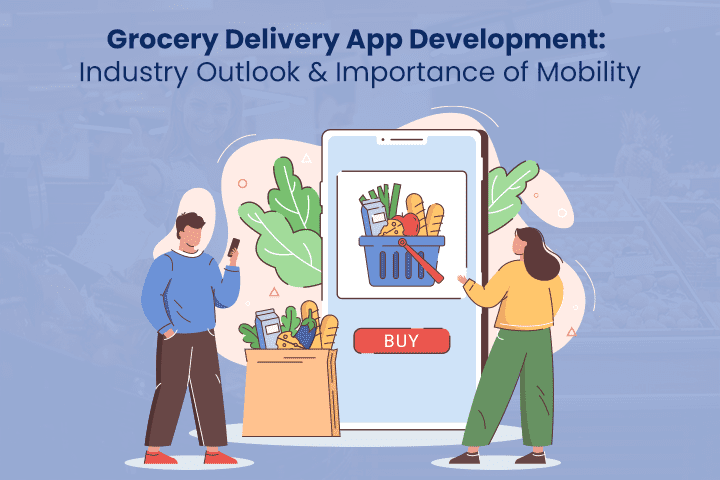
How Grocery Delivery App Development Become A Norm In The Race Of Mobilization? Avakash Dekavadiya It’s well-said that opportunities are hidden in plain sight. The latest pandemic is the best instance for the grocery industry that gets a sudden boost when most of the stores go out of business or experience a halt in production or supply chain. This is the time of the decade when most grocery stores were convinced to join the mobile app development race to easily accommodate the changing shopping patterns of the people. Now, life is presumed to pre-pandemic levels, but mobile grocery ordering become a new norm, which is here to stay. The amazing growth of Instacart, Walmart, Shipt, and other mobile grocery stores have geared up other players in the industry to raise a toast to success with mobile application development. A couple of grocery app development trends that confirm the facts The On-demand Grocery App Development Solutions has become a need of the hour. The global grocery retail market size was valued at $11,324.4 billion in 2021 and is expected to grow at a CAGR of 3.0% from 2022 to 2030. According to an omnichannel grocery study conducted in the USA, “26% of shoppers surveyed, or 6% of all consumers, say they have been placing online grocery orders more than once a month.” As mobile use grows by 14% every year, the eGrocery retailers are complementing the online presence with mobile app development to evolve with customers’ needs and shopping behavior. Looking at the changing trends, smart grocers are winning by leveraging technology to blur the line between physical and online grocery shopping in the retail setting that their target audience is expecting the least. Business models of grocery delivery application Grocery delivery app Grocery stores that want to adapt to the shift to mobile ordering are favoring launching the grocery delivery app development solution that facilitates browsing, ordering, and getting products shipped at the preferred time and place right from the mobile. In-store grocery app The in-store grocery app gives a feel of the grocery store virtually with images resembling the grocery store ambiance. It displays all the categories of grocery products along with their details that help users know about product quality. Also, the notifications are sent to the users when any discount is offered or new products arrived. Personalized grocery app The personalized grocery app aims to improve the grocery shopping experience by allowing them to create and share the shopping list online with the physical grocery store and collect it from the store at the time they need it. Aggregator apps The entrepreneur can get created a platform that allows different grocers worldwide to upload the offerings and sell them in return for a certain amount. The grocers need to pay subscription fees and a cut from every transaction that occurs through a platform just like- Amazon. Top 5 business benefits of Grocery delivery app Development The grocery stores are partnering with the mobile app development company to mobilize the business services to not only step in with users’ trends but reap a lot of advantages in return. Streamline inventory and order management The stores can effectively manage the inventory with mobile application development as it provides them with all the details on a single dashboard without much ado. Also, they get alerts for the products that are low on stock and need to replenish according to their requirements. Tracking the orders allows them to identify the future requirements as per the season or occasion. Upscale store services When you are running a local grocery store, then teaming up with a mobile app development company helps you expand the reach at a wider scale at competitive rates. Personalized marketing Traditionally, marketing expenses are quite high and they cannot be reused at a later stage. With grocery mobile app development, the store can easily recognize the individual’s preferences and behavior in grocery shopping which helps in sending them marketing messages to them accordingly. Personalized marketing improves sales and loyalty. Keep up with the competition It’s vital to make the grocery business available on mobile because your competition is already doing. Otherwise, the existing users take no time to turn to the competition. The mobile app services help them to be available where the users are searching for them. Provide more alternatives at one-stop The mobile grocery app makes the product and its details available to view right through mobile so that the users have more alternatives to browse and buy the product, which enhances their experiences. The advanced features that differentiate your grocery app in the crowd To gain a strong foothold in the market, it’s essential to integrate or build advanced functionalities in the grocery mobile app development that becomes USP. Enable spending tracking A big part of expenditure goes into grocery shopping which makes it important for people to buy groceries judiciously. The grocery mobile app development solution must recommend strategies to minimize grocery expenditure and facilitate a spending chart that gives an overview of spending in the last few months. Effortless list sharing Many times, the users want to get cross-checked the grocery items list with their family members. That’s where they expect the mobile application development solution must allow them to seamlessly share the grocery list for informed decision making. Shopping list reminders The users create the shopping list and forgot to buy them. This mistake puts them in trouble when a product goes out of stock. The built-in reminders that users can set by themselves for reminding them for shopping or the AI integration can automatically remind the users of shopping items based on their buying history assessment. Convenient payment Mobile grocery shopping has already busted the long queues at the stores. The multiple payment methods facilitated by the mobile app development company will help users to checkout quickly by making the payment they want Barcode scanners The barcode scanner is the next-gen trick to allow users to get all the information related to the product on their mobile screen just by scanning the bare code
Transforming FMCG Retail With B2B E-Commerce Platform
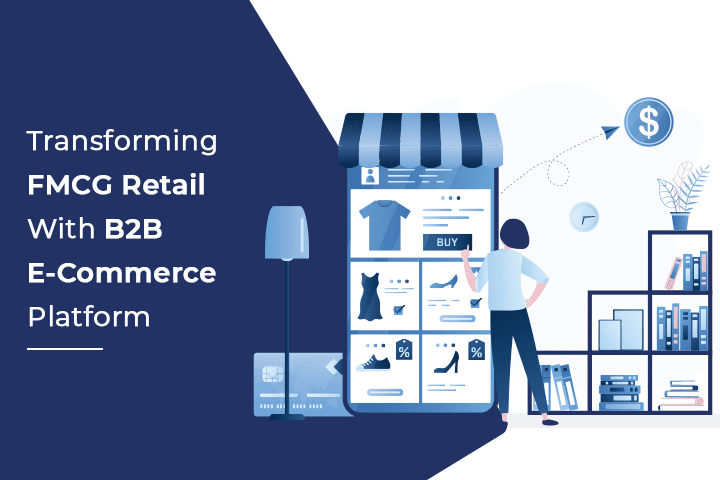
Transforming FMCG Retail With B2B E-Commerce Platform Avakash Dekavadiya After the pandemic, you may have observed businesses turn into the e-commerce space. This transformation from a physical store to a hybrid e-commerce driven business model is a survival instinct leading businesses towards profitability. From customers to retailers, everyone is adopting the digital selling model, which has also increased the demand for FMCG retail via B2B e-commerce solutions. When e-commerce solutions first came into existence, they were popular for electronics, books, clothing, and other supplies. However, given the rise in the market demand, now everything is being sold online, such as groceries, food, spectacles, and other supplies. At the time of the pandemic, supermarkets evolved and industry leaders like Myntra, Amazon, Flipkart, and Bigbasket started selling FMCG products (Fast-Moving Consumer Goods). Isn’t this the ideal landscape for B2B sellers to expand to e-commerce platforms? Similar to how FMCG retail depends on wholesale trade, vendor support, or other functions, B2B eCommerce software solutions are also becoming a medium for conducting these activities online. In this article, we will discuss how: Why We Need A B2B E-Commerce Software For FMCG Retail? FMCG retail can transform and become better with eCommerce software development, due to a sustainable model and digital support. Let’s explore how: 1. Survival of Stores The same hassle-free experience received when we are the end-customer is offered by a B2B eCommerce software solution. Just like how we purchase online in a cost-effective, sustainable, and dependable manner, B2B eCommerce solutions help B2B companies or FMCG retail thrive. This helps regional businesses and other vendors to continue the FMCG supply chain via an online channel. It ensures the long-term survival of small and big FMCG retail. 2. Sustainable Business Models Conventional business models are obsolete and old. We have discovered this at the onset of the pandemic. However, the customer is smart, and they have already shifted to a more sustainable, comfortable environment, where everything is delivered at your doorstep. FMCG retail businesses need to adapt to this model to survive. In the following years, more and more FMCG retail businesses and B2B vendors will move to the digital space. Adopting this market right now will only ensure the sustainability of the business in the long term. This model will offer a high customer experience, quick purchases, and simpler supply chain management. This makes B2B eCommerce solutions sustainable and future-ready. 3. Agri-Tech Support Agriculture is an important part of FMCG retail. When the pandemic started, FMCG retail related to pulses, rice, and other agro-based products stopped. The conventional trading markets were closed due to government and pandemic-related restrictions. At this time, B2B eCommerce software helped improve agro-businesses and offered a survival medium. With better-driven B2B eCommerce solutions, FMCG retail gained a competitive edge over the conventional trade market. This also helped create a healthy environment for agro-businesses driven by satisfactory prices. 4. Support To Business Ecosystem In the next 4 years, the market value of food and grocery will reach USD 1.1 trillion. Now think about it, if just 15 percent of this market is online, then that may retain USD 950 billion value. Isn’t that a huge opportunity to grasp? Add to this the leap that customer demands have taken. This creates additional challenges for FMCG businesses. The only thing that eases these challenges and supports the ongoing business ecosystem rightly is B2B eCommerce solutions. They capitalize on the growth and improve user experience along with sustainability. Do we really need a B2B e-commerce solution for FMCG retail? Explore the benefits Benefits of a B2B E-Commerce Software For FMCG Retail Is it beneficial to use a B2B eCommerce software FMCG retail? Understand how this platform helps you streamline processes and improve operational efficiency. Cater to Customer: When you are able to automate orders and payments via a B2B eCommerce softwarein place of hectic manual processing, you can improve the customer experience. Simpler Search Options: On a B2B eCommerce software solution, adding search options filtered via SKU, product name, attributes, description, etc. helps reduce hassle for the customer. Meet Customer Expectations: B2B eCommerce solutions help meet user demands on various levels, such as personalized catalogs, simpler payment workflows, and order placements. Streamlined Processes: With a high user experience, you can improve negotiation too. The user can request a quote online or quote to cash to quickly communicate and negotiate an appreciable price. Customized Processes: B2B sellers can streamline ordering, pricing, shipping, and checkout for FMCG retail businesses. This helps buyers use pre-negotiated orders again without much hassle. Integrated Business Excellence: ity, decreases silos, and increases collaboration speed. Online Sales Streamlining: B2B businesses can streamline and automate B2B FMCG retail via an accessible portal that is open 24*7. Handle Different Sites: Through one B2B eCommerce solution, it is possible to handle and overlook independent processes, find details at one admin panel, and create customized reports. Simplifying a Complex Model: B2B eCommerce software solutions help you take care of customers, partners, and vendors in one place. Hence, simplifying a complex business model. Conclusion FMCG retail is not running low on-demand today or anytime in the future. In fact, there’s an increase in demand for affordable FMCG retail. For this, B2B eCommerce platforms can create a thriving sustainable business ecosystem. If you wish to develop an eCommerce solution for your business, reach out to us. AIMDek Technologies is an eCommerce software development company aiding the transformation needs of many organizations. We have helped various B2B sellers in the domain. Connect with us for a free quote today! skip render: ucaddon_next_prev_post
Upcoming Webinar: Leveraging Smart Technologies to Transform the New Challenging Healthcare Industry

Upcoming Webinar: Leveraging Smart Technologies to Transform the New Challenging Healthcare Industry Avakash Dekavadiya TLDR; COVID-19 is not only damaging economies but also impacting the healthcare industry of the world. To overcome this depressing wave, technology can help us mitigate short-term and long-term challenges. Attend our webinar on “Leveraging Smart Technologies to Transform the New Challenging Healthcare Industry”. Meet us on 28th July at 11 AM EST. Simply click on the registration link given at the end of this discussion, fill in the details, and you will receive the link to the webinar in 24 hours. Ever since COVID-19 disrupted our lives, technology has been the single most valuable supporter of the healthcare sector. The collective response that we are generating during this crisis is through the power of technology. It can help in fighting the disease and improve healthcare delivery to patients. For this reason, healthcare communities across the globe are considering drastic and challenging methods to secure international healthcare conditions and create a collective crisis response. Simply put, technology is the immediate and long-term solution for the healthcare industry. Something, which we would discuss in the webinar on Leveraging Smart Technologies to Transform the New Challenging Healthcare Industry on 28th July. Register to become a part of this discussion. What We Will Cover in the Webinar? Through this 60 minutes webinar, you can understand: How to deal with major challenges of the healthcare industry and how these challenges can be mitigated during and after COVID-19. How smart technologies including Salesforce, Liferay, and Microsoft can help the healthcare industry. Topics that will be covered: Technologies like Salesforce, Liferay, and Microsoft offer an array of options to deal with the challenges of healthcare. From ensuring online patient care to improving record management, you can automate and streamline multiple workflows. Join our webinar to understand how. Webinar Details It is clear that smart technologies can help in relieving the challenges of the healthcare industry. If you want to explore more about the topic, attend our webinar. Check out the details of the registration below. Webinar Time : 28 Jul at 11 AM EST Webinar Registration link : Click here to register Webinar Platform Information: Click here to join. You’ll get a link to the webinar within 24 hours of registration. How Can You Join The Webinar? If you are interested in understanding the process of improving healthcare industry challenges like access, rising costs, and poor quality of care, join us. We are excited to connect with you all. Click on the link below Leveraging Smart Technologies to Transform the New Challenging Healthcare Industry. Once you have registered, you will get a live link to the webinar before 24 hours. This link would help you attend the webinar without any hassle. On 28th July, ensure that you log in to the URL at least 10 minutes before the webinar. The platform that we would be using for the webinar is Microsoft Teams. Prefer using headphones or headset for a clear outcome. Check your internet connection prior to the event to avoid disruption due to connectivity. Just in case you miss the webinar, you can receive the slideshare and recordings after the webinar. However, for that, you should be pre-registered. Meet Our Presenters We are featuring 4 speakers in this webinar. All four of them have expertise in different domains including Liferay, Salesforce, and Microsoft. 1. Hiren Patel Hiren is our Chief Technology Officer. From Salesforce to Mobility, he is equipped to answer every question. With his industry knowledge and expertise gathered over __ years, he can help us resolve grave healthcare challenges with technologies. 2. Bhavik Vachhani Bhavik Specializes in Liferay development. He has amazing solutions for record management, patient management, and company growth management. If Liferay seems like a technology you want to use, Bhavik is the person who can consult you through it. 3. Akriti Jha Akriti is our Salesforce expert with end-to-end knowledge of Salesforce efficiency and workflows. She can help you understand the pathway to bridging the gap between various stakeholders. During the webinar, she will help you explore the importance of Salesforce health cloud in the time of this pandemic. 4. Manav Patel Manav is our Microsoft expert, who has worked with various Microsoft technologies that empower healthcare. In the webinar, he would help you uncover major Microsoft products that we can use in various healthcare domains. Are you facing issues in your healthcare organization? Register now to become a part of our brainstorming session. Catch up in the race. Join our webinar to know how. skip render: ucaddon_next_prev_post
How Enterprise Software Solutions Can Empower Your Business?
How Enterprise Software Solutions Can Empower Your Business? Avakash Dekavadiya As your business scales, it is almost inevitable to avoid the diverse needs of different software. AIMDek’s solution deck can help you in crisis management across diverse enterprise needs. From being able to automate workflows to reduce and eliminate manual errors, enterprise software solutions help you improve workplace productivity and customer retention. For this reason, we have discussed 5 important enterprise software solutions, which can aid the functioning of multiple organizations. Let’s see what are these enterprise solutions and how these solutions can improve your working and workplace functioning. Which Enterprise Software Solutions You Need? Before we check the following enterprise software solutions, let’s understand what are enterprise software solutions: As the name suggests, an enterprise software solution is designed for simplifying the functioning of an enterprise. Isn’t it obvious? Enterprises are large organizations with multiple areas of work, and these enterprises work very differently from small businesses. For instance, a small business may not require the management of different currencies because they may have local customers. Contrary to this, an enterprise has customers spread across countries and in various domains. Hence, the change in organizational needs. To cater to these organizational needs, enterprise software solutions are designed. It is imperative to note that these solutions are not only developed for enterprises but can also help small and medium organizations. Since every business is progressing towards success, having a robust, feature-rich solution is always beneficial. Now, without further ado, we will move on the enterprise software solutions that are important for various industries: 1. Enterprise Portal Solution It is not unlikely for an enterprise to require a portal for the seamless working of the organization. This is because the enterprise portal solutions offer improved content management and updated access at any time. For example, having an HR system for the robust delivery of information to employees on a timely basis. These services include multiple types of portal solutions, ranging from web experience to strong customer management. Check the enterprise portal solutions delivered by AIMDek: Intranet portal Collaboration portal Partner portal Human capital management portal Case management portal It is possible to improve performance and streamline business processes through enterprise portal solutions. 2. Healthcare IT Solution Being regularly challenged by data security, increasing costs, and unsuitable reimbursements, the healthcare sector is moving towards value-based innovative information technology solutions. These solutions improve operational clinical efficiency, reduce costs, and realize high-performance in the workforce. This is why AIMDek offers state-of-the-art healthcare solutions; contrary to the available mainstream products. Here are some of the healthcare IT solutions provided: Hospital management system EHR software Healthcare mobility solutions Patient portal From telemedicine and online patient record access to clinical management and advanced decision support, you can receive an array of effective features through healthcare IT solutions. 3. Enterprise Mobility Solution Mobility defines the current digital transformation. From being able to connect from anytime anywhere to embracing industry-specific features, mobility offers a foundation to many enterprise solutions today. You can acquire mobile-based, IP-based, app technology, and maintenance through enterprise mobility solutions. Here’s what AIMDek provides in this area: Enterprise mobility advisory Enterprise mobility infrastructure management Enterprise mobility operations management Enterprise mobility collaboration services Custom mobile development: customer and enterprise-oriented You can significantly improve your return-on-investment and brand value through enterprise mobility solutions. 4. CRM Solution When you are in dire need to support your users and generate more leads for business growth, customer relationship management solutions help you. These solutions can empower your team to harbor valuable relationships with customers for improved revenue and cash flow. Not only this but also you can receive advanced benefits of a robust, well-designed CRM solution such as customer loyalty management, sales productivity, customer support guidance, business intelligence, social analytics, etc. Below are some of the CRM services offered by AIMDek: CRM planning and strategizing CRM evaluation and architecture CRM analytics CRM predictive modeling CRM campaign and marketing support CRM solutions can help you amplify your lead generation and advance your client relationships through proper sales account management. 5. Telehealth Solution The healthcare industry often fails to deliver expected healthcare to its patients. The patient journey is regularly ruined by a lousy response mechanism and poor health management. to remedy that, enterprises can utilize a telehealth management solution for a seamless patient journey, increased revenue, and improved patient satisfaction. Here are some of the features of a telehealth solution: Patient appointment scheduler File sharing support Full integration with EHR Streamlined workflow for data tasks Mobile and remote access 100% HIPAA compliant Benefits of Using Enterprise Software Solution Undoubtedly, each enterprise software solution has a different type of dedicated benefits for the organization. However, there are a few collective advantages related to every solution. Below we have discussed these benefits which you can achieve by utilizing any of the above enterprise software solution: 1. Better Productivity When you implement or utilize an enterprise software solution, your productivity improves. Not the productivity of a single employee, but the productivity of the business. The reason behind this is automation, feasible workflows, and streamlined processes. When these factors are ingrained in business, productivity automatically rises and makes working easier and more effective according to the team and workplace environment. However, some enterprise software solutions may bring more value to the organization than another, and this decision depends on your dedicated requirements. 2. Customer Retention Think about it, your customers seek hassle-free transactions. They only want you to improve your communications such that customers’ need is almost immediately fulfilled. When you employ any of the above technologies, you move in that direction without even noticing. Take healthcare IT solutions, for example. Through this solution, you can improve patient management and go online, which will improve customer experience. Hence, significant increase in retention. Another example is customer relationship management or CRM. The name itself has customer and the software is dedicated to the customer. Therefore, it delivers high value to your customers and helps in