Agentforce Service Agent: Use Cases, Setup, Cost & ROI

Agentforce Service Agent: What It Is, How It Works, Use Cases, Setup, and Cost Agentforce Service Agent is a Salesforce AI agent built for service workflows. It can answer questions, use approved business data, process common service requests, and transfer complex issues to human service representatives. Salesforce describes Agentforce Service Agent as an AI agent that supports customers on messaging channels, processes incoming cases, resolves common inquiries, and transfers complex or sensitive conversations when needed. In simple terms: Agentforce Service Agent helps businesses automate service work inside Salesforce. It is not just a chatbot. It can connect with Salesforce data, knowledge, workflows, and approved actions to help users get things done faster. What Is Agentforce Service Agent? Agentforce Service Agent is part of Salesforce Agentforce. It is designed for service use cases where customers or employees need fast, accurate support. A service agent can help with: Answering common questions Searching approved knowledge articles Creating or updating cases Checking case status Routing service requests Supporting product or warranty questions Escalating complex issues to a human Salesforce describes Agentforce for Service as a trusted conversational AI agent that works across self-service portals and messaging channels, uses trusted business data and knowledge, and helps service teams focus on higher-value work. How Agentforce Service Agent Works An Agentforce Service Agent works by combining business data, knowledge, actions, and guardrails. Component What It Means Role What the agent is responsible for Knowledge The approved information it can use Actions The tasks it is allowed to perform Guardrails The rules and limits it must follow Handoff When it should transfer to a human Example: A customer asks, “What is the status of my support case?” The service agent can check Salesforce, find the case, provide the latest update, and escalate if the case needs human review. That is the main difference between a static chatbot and an AI service agent. A chatbot usually responds. An Agentforce Service Agent can respond and take approved action. Agentforce Service Agent vs. Chatbot Area Traditional Chatbot Agentforce Service Agent Main role Answer basic questions Support service workflows Conversation style Often scripted More flexible and AI-driven Data access Usually limited Can use Salesforce and approved knowledge Actions Basic routing or FAQs Can complete approved tasks Escalation Limited or manual Can hand off to service reps Best fit Simple FAQs Case, support, and service automation The simple version: A chatbot answers questions. Agentforce Service Agent helps complete service work. Common Agentforce Service Agent Use Cases Agentforce Service Agent can support many service-related workflows. 1. Customer FAQs The agent can answer common questions using approved knowledge articles. Example: A customer asks how to reset a product, check a policy, or troubleshoot a basic issue. The agent finds the approved response and shares it instantly. 2. Case Status Updates The agent can help customers check open case progress without waiting for a human agent. Example: A customer asks, “Has my support ticket been updated?” The agent checks Salesforce and gives the latest status. 3. Case Creation The agent can collect required details and create a new case. Example: A user reports a product issue. The agent asks for key information, creates the case, and routes it to the right team. 4. Warranty and Product Support The agent can support product, service, or warranty-related questions. Example: A customer asks whether an issue is covered under warranty. The agent checks approved guidance or escalates the request if it needs review. 5. Field Service Handoff The agent can help route service requests to field teams. Example: A technician needs customer history, product details, or service notes before a visit. The agent retrieves relevant information from Salesforce. 6. Healthcare and MedTech Service Workflows For healthcare and MedTech companies, Agentforce Service Agent can support more specialized service workflows. Examples include: Device support inquiries Product documentation support Warranty requests Field service routing Provider or patient inquiry routing Service case creation Escalation for sensitive issues These use cases need stronger governance. The agent should use approved knowledge, follow defined workflows, and escalate when the request is outside its scope. What Do You Need to Set Up Agentforce Service Agent? A successful setup needs more than turning on an AI feature. You need the right data, workflows, permissions, and controls. Key setup requirements include: Salesforce readiness Your Salesforce org should have clean data and clear service workflows. Knowledge base quality The agent needs accurate, approved, and updated knowledge articles. User permissions The agent should only access the data and actions it is allowed to use. Service channels Decide where the agent will work, such as messaging, portal, website, or app. Actions and workflows Define what the agent can do, such as creating cases, checking status, or triggering flows. Escalation rules creating cases, checking status, or triggering flows. Testing Test real questions, edge cases, incorrect inputs, and sensitive scenarios before launch. How Much Does Agentforce Service Agent Cost? Agentforce Service Agent pricing depends on usage, licensing, and implementation needs. Salesforce lists Flex Credits at $500 for 100,000 credits. One standard Agentforce action uses 20 Flex Credits, which equals about $0.10 per action. A simple planning estimate: Usage Example Estimated Cost 1 action $0.10 5 actions $0.50 10 actions $1.00 10,000 actions/month $1,000/month 50,000 actions/month $5,000/month Example: If a service team handles 5,000 routine requests per month and each interaction uses 5 actions, the estimated usage cost would be: 5,000 × 5 × $0.10 = $2,500/month Actual costs may vary based on Salesforce contract terms, action volume, integrations, data complexity, number of agents, and implementation effort. The better ROI question is: How many manual tasks, support cases, handoffs, or service hours can Agentforce reduce? How to Measure Agentforce Service Agent ROI Agentforce ROI should be tied to business outcomes. Business Goal Metric to Track Faster support First response time Less manual work Time saved per request Lower support load Case deflection rate Better service quality Escalation accuracy Better customer experience CSAT or satisfaction score Higher productivity Cases handled per rep Start with a
10 Rebate Execution Failures Causing Revenue Loss

10 Rebate Execution Failures Causing Revenue Loss Avakash Dekavadiya Specific rebate process breakdowns manufacturers hit when spreadsheet-based rebate management can’t scale If you’re running rebate programs for 30+ distributors, you already know this truth: rebate revenue loss doesn’t happen because contracts are wrong. It happens in the execution gap between what the contract says and what actually gets billed, claimed, and settled. The damage shows up at quarter-end when finance starts reconciling and the numbers don’t tie out. By then, the rebate revenue leakage is already locked in. I’ve worked with rebate managers running programs at mid-sized manufacturers, and the rebate management issues are identical. Excel breaks silently. Tier threshold gaps go unnoticed. Claims get rejected for reasons no one can trace. Every quarter, the same fire drills. Below are 10 concrete signs your rebate program is failing and affecting revenue. Data & Calculation Breakdowns 1. Excel tier math breaks silently Your rebate tier calculation works perfectly in January. In March, someone updates the contract terms and inserts a new row in the master spreadsheet. Cell references shift. The formula breaks. No error message appears. No alert fires. The system just uses the wrong tier structure for the next payout. Finance discovers the rebate calculation error weeks later when a distributor questions their rebate amount, or worse, during year-end rebate audit. The cost: One manufacturer overpaid their top distributor $250K before anyone caught this rebate overpayment risk. 2. $130K tier gap no one sees until it’s too late A distributor closes Q4 with $1.87M in qualifying volume. They earned a 3% rebate. But here’s what no one noticed: at $2M, the rebate tier jumps to 5%. That $130K rebate tier threshold gap was sitting there all quarter. If anyone had visibility into real-time tier progress, they could have worked the account to hit the threshold. Instead, the quarter closed at $1.95M. The higher tier was missed. The rebate revenue opportunity evaporated. The reality: Tier acceleration in complex rebate programs only works if someone is actively watching the thresholds, not reviewing static spreadsheets after the quarter ends. 3. ABC123 vs ABC-123 kills valid claims Your ERP system lists a product as ABC123. Your distributor’s system records it as ABC-123. When they submit a bill-back claim, your automated reconciliation process treats these as two different products. The claim auto-rejects. No one gets notified. The distributor assumes you’re slow-paying. You assume the claim was invalid. Weeks later, if anyone investigates, the discrepancy surfaces. By then, it’s a dispute. The cost: One regional manufacturer found that 18% of valid claims were being rejected purely due to product ID mismatches. These bill-back claim errors directly feed rebate revenue leakage. Contract Execution Failures 4. Q3 promotional rebate keeps paying into Q1 You ran a special promotional rebate for Q3 that was supposed to end September 30. No one turned it off in the system. It kept accruing into Q1 of the next year. No workflow flagged the expiration. No system killed the program automatically. Finance spotted it four months later during a historical payout review. By then, unauthorized rebates had already been credited. The reality: Contract terms stored in PDFs and email attachments can’t enforce their own end dates. This is a classic rebate contract execution issue. 5. Contract terms never make it into billing logic The rebate agreement is signed, filed, and stored. But only part of the terms ever made it into your billing system…whatever someone manually entered during initial setup. Invoices go out without the rebate rates applied correctly. Later, credit notes get issued to fix the gap. Each correction introduces more delay, more reconciliation work, and more opportunities for error. The cost: One team found 32% of their invoices required manual correction after the fact because billing logic didn’t reflect actual contract terms. These rebate billing and settlement issues compound quarterly. Billing & Collection Problems 6. Earned rebates never get invoiced The rebate accrues correctly in your financial reports. The liability is forecasted. The revenue shows up as earned. But no invoice is ever sent. No payment is ever collected. Months go by. The aged receivable becomes awkward to chase down. Eventually, it gets written off or quietly forgotten. The gap: One manufacturer had $480K sitting in accrued rebates that were never converted to actual cash because no one triggered the invoicing workflow. This rebate underpayment issue cost them real margin. 7. $2.1M forecast becomes $1.8M actual payout At quarter-end, your finance team forecasts $2.1M in rebate liability based on estimated volume and contract terms. Actual settlement comes in at $1.8M. So what happened? Was the forecast model wrong? Did partners under-submit claims? Did contract terms change mid-quarter without anyone updating the forecast? No one can answer with confidence because there’s no transaction-level traceability linking accruals to actual settlements. The reality: Without visibility into what’s driving the gap, you’re forecasting rebate liability through educated guesswork, not financial control. This rebate accrual vs payout mismatch hides operational risks. 8. Same $5M volume triggers two rebate programs A distributor hits $5M in annual volume. That volume qualifies them for both your growth incentive rebate and your volume tier rebate. Your system has no cross-program validation. Both programs pay out in full on the same base. The overlap gets discovered during annual audit or never. By then, trying to recover the overpayment damages the partner relationship and creates manual work no one budgeted for. The cost: One manufacturer double-paid $175K on overlapping volume before their auditor flagged it. These rebate program inefficiencies are common in manufacturer rebate management. Claim & Qualification Issues 9. Rejected bill-backs pile up and never get resolved You submit a bill-back claim to your supplier. They reject it because their sales records show different numbers than yours. The dispute lands in someone’s inbox. There’s no shared data source to quickly resolve the mismatch. Follow-up emails stall. Meanwhile, the valid rebate sits unpaid. Eventually, it gets written off to avoid the reconciliation effort. The cost: 25% rebate claim rejection rates are
Why Manufacturers Are Losing Money on Rebate Disputes and How to Stop
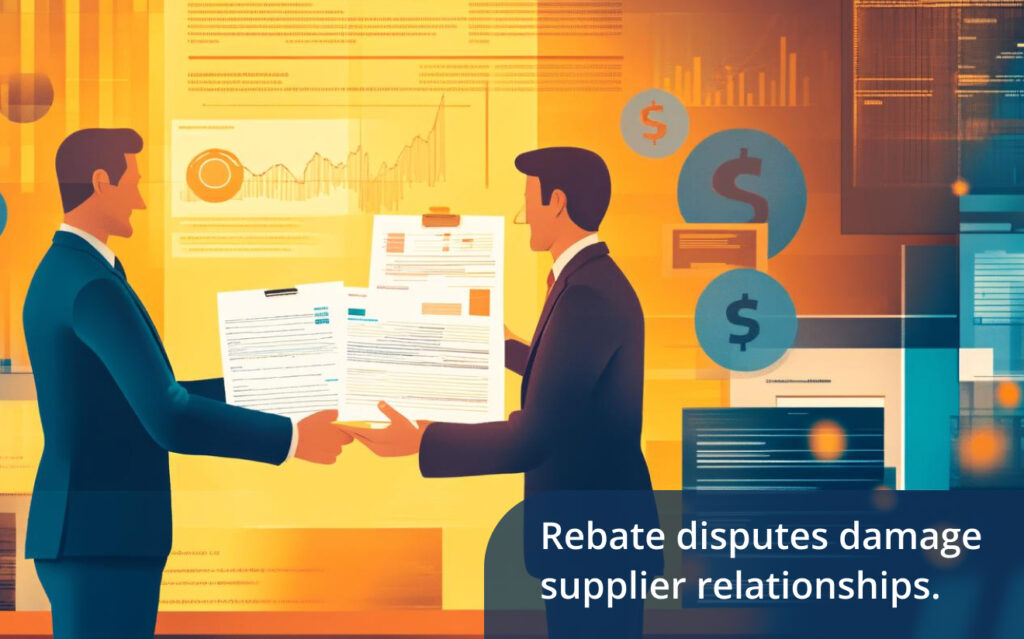
Why Manufacturers Are Losing Money on Rebate Disputes and How to Stop Avakash Dekavadiya Disputes affect 30-50% of rebate programs monthly. These conflicts cost time, damage relationships, and create avoidable revenue leakage. But here’s what most don’t realize: these disputes aren’t caused by disagreement – they’re caused by information gaps. Rebate programs are designed to strengthen partnerships and drive growth. Yet when both parties operate from different data sources, conflicts become inevitable. The sales team sees one set of purchase numbers. Finance sees another. The supplier’s system shows a different total entirely. By the time anyone notices, weeks have passed and trust is damaged. The good news? Real-time transparency reduces disputes by 80-90%. Why Supplier Disputes Over Rebates Happen in the First Place Rebate contracts are often complex. Tiered thresholds, conditional requirements, volume brackets, time windows, and SKU-level rules make rebates difficult to track manually. When most manufacturers still rely on spreadsheets and email for rebate management, disputes become inevitable rather than exceptional. The Three Most Damaging Problems That Spark Disputes Problem #1: Calculation Mismatches (Happens in 35%+ of disputes) Supplier calculations don’t match distributor calculations. Both think they’re right – and both have different data sources. One party’s ERP shows different purchase volumes than the other’s accounting system. Transaction timing, currency conversions, or product categorizations create discrepancies. Consequence: 3-week resolution cycles, significant administrative overhead, repeated follow-ups, escalation to finance leadership. Problem #2: Outdated or Inaccurate Accruals (Causes 60%+ of overpayments) Manual entry increases the error margin significantly. Spreadsheet-based tracking means accrual updates happen weekly or monthly, not in real-time. By the time the quarter ends, neither party is certain what was actually earned. Consequence: Unnecessary overpayments, bad-debt provisions, inaccuracy averaging 15-20%, financial restatement risk. Problem #3: Program Terms Aren’t Interpreted the Same Way (Leads to relationship breakdown) Ambiguities in agreements cause confusion at settlement time. One party interprets a “Q3 threshold” as calendar Q3; another as fiscal Q3. One distributor believes a product category changed in July; the manufacturer claims it was always that way. Consequence: Distributor questions fairness, begins diversifying suppliers, relationship deteriorates, lost future revenue. Supporting data: Research shows one-third of distributors receive rebate updates only when they ask, and one-quarter receive zero communication about rebate program updates until payment time. Simply put: When data visibility is low, disputes are high. Which Problem Is Costing You the Most? Different manufacturing scenarios face different challenges: If you manage 50-100 rebate agreements: Calculation mismatches are your biggest issue – multiple programs, multiple data sources = constant conflicts If you process 500+ claims monthly: Outdated accruals are your financial drain – manual updates can’t keep pace with transaction velocity If you’re scaling new distributors: Interpretation gaps hurt your growth – onboarding takes weeks because new partners don’t understand your terms The good news: Real-time transparency fixes all three. But understanding which problem affects you most helps you prioritize where to start. 1. The True Cost of Supplier Rebate Disputes These conflicts don’t just slow down payments – they hurt business in measurable ways: Delayed settlements affect cash flow – When payment disputes take 10-15 days to resolve, smaller distributors face working capital pressure and begin questioning the manufacturer’s reliability. Missed rebate opportunities reduce margins – Distributors who lack clarity about rebate status often don’t pursue them, leaving earnings on the table. Research suggests 8-12% of legitimate rebates go unclaimed because distributors weren’t aware they qualified. Strained supplier-partner relationships – Repeated disputes damage trust. Distributors begin questioning whether the manufacturer is treating them fairly, potentially shifting orders to competitors. Increased workload for finance and sales teams – Manual tracking and dispute resolution take significant administrative resources. One beverage distributor reported spending 30-40 hours monthly managing rebates across multiple suppliers. Potential write-offs due to unclear agreements – Unresolved disputes sometimes result in one-time write-offs or bad-debt provisions affecting quarterly earnings. Slow quarter-end closing cycles – Finance teams get stuck reconciling rebate accruals when data is unclear, delaying financial close and creating audit vulnerabilities. 2. How Real-Time Transparency Solves Rebate Disputes Transparency isn’t just about sharing information – it’s about ensuring everyone sees the same truth at the same time. When both parties operate from identical, real-time data, disputes lose their foundation. Real-time transparency isn’t a collection of separate features – it’s an integrated system where each component strengthens the others. When purchase validation connects to automated accruals, which connect to tier tracking, which connect to partner portals, you create a closed-loop system that prevents disputes at every stage. Centralized Agreement Storage Creates Single Source of Truth Both supplier and distributor access the same set of terms stored in a centralized system. OUTCOME: This eliminates ambiguity and creates a single source of truth. Instead of each party maintaining their own interpretation of the contract, there’s one authoritative version that both can reference. One version of the contract means zero disputes over contract interpretation. Disputes from this cause drop 100%. Real-Time Data Sync Removes Calculation Differences Live synchronization of sales, purchase, and claims data ensures: No outdated reports (information updates as transactions occur) No relying on manual spreadsheets (data flows automatically from ERP/CRM systems) No conflicting totals at settlement time (both parties see identical numbers) Immediate identification of discrepancies if they occur OUTCOME: When supplier and distributor pull rebate reports, they see the same figures. Disputes over “your system shows X, our system shows Y” disappear entirely. This single change eliminates approximately 35-40% of all rebate disputes. Automated Accrual Calculations Reduce Human Error Automation ensures that accruals update automatically as new transactions flow in: Each purchase is instantly validated against rebate terms Tier eligibility is calculated automatically Accrual amounts adjust in real-time as transactions arrive No manual spreadsheet entries to introduce errors OUTCOME: Accuracy improves from 85-90% (with manual processes) to 95-98% (with automation). For a $50M rebate program, this improvement translates to $150,000-$200,000 in recovered overpayments annually. Additionally, disputes from calculation errors drop 95%+. Transparent Tier Tracking Prevents Disputes About Eligibility Suppliers and distributors can see on a real-time dashboard: Current tier
Salesforce Personalization for MedTech- Delivering Data Security, Interoperability and Sustainability
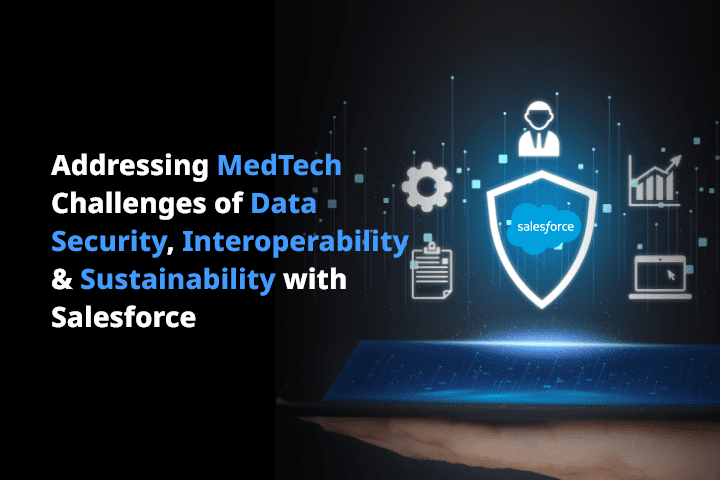
Salesforce Personalization for MedTech- Delivering Data Security, Interoperability and Sustainability Avakash Dekavadiya MedTech organizations are in turmoil to cope with the latest trends in the healthcare domain and to keep their medical wearable devices, cloud platforms, and digital health solutions relevant for users. In the last 3 years, there has been a growing need to provide patients access to their information while ensuring data integrity and security of PHI, especially in the US. Also, MedTech companies must create optimum data interoperability to justify their pricing and to battle the rising healthcare cost concerns with optimum data distribution channels. Along with these, there are also rising challenges to fight climate change and meet the market demands for sustainability that have been surrounding Medical Device Manufacturers and DaaS as well as Cloud Intelligence companies utilizing multiple technology platforms and large data servers. Whether we talk about Security, Data Interoperability, or Sustainable business approach, a platform that can provide all these capabilities and much more with its CRM and bundle of health cloud and MedTech services is Salesforce! Along with an experienced Salesforce Consulting Partner that has experience and expertise in MedTech and the digital health domain, a MedTech company can personalize Salesforce for its integration, sustainability, regulatory, and data security requirements. Create a futuristic business model and an integrated as well as sustainable digital ecosystem with Salesforce where data flows easily and securely and generates insights that not only deliver business intelligence but also help in optimum data distribution with HIPAA and FHIR compliances! Understanding Salesforce’s capabilities for MedTech Data Security, Interoperability, and Sustainability: MedTech Data Security: When you employ Salesforce, MedTech companies can protect their data in a personalized as well as holistic manner. For instance, Salesforce provides a comprehensive and flexible data security model to secure data at three different levels- Objects, Fields, and records. When we talk about MedTech, objects would be the departments or inter-departmental functions for which Salesforce is used. For instance, for Salesforce Sales Cloud the inter-departmental functions would be Opportunities, Leads, Data, Campaigns, and others. Similarly, Salesforce provides 2 other layers of data security for Objects with access definitions for each field and record of a particular data set. Here fields refer to the columns or holistic category data and records refer to rows or individual data sets. To provide a brief, let’s say there is a data file that shares Patient Data or User Data of the Device and its usage history. Thus, when you are setting permissions and visibility of data, patients will have access to their personal information and not to all the other information. Non-medical professionals or specifically product QA teams can track details like usage and device failure data but not get access to the PHI of patients generated with the Medical Device. You can also set permissions and visibility for each user as well as user sets. MedTech Data Interoperability: To provide optimum data interoperability for healthcare providers and to MedTech companies thathave multiple data distribution channels or are a cloud-intelligence and DaaS platform, they can leverage Salesforce Data Interoperability solutions. With multiple integration layers available across security, data, process, and applications, MedTech companies can create an integrated Digital Ecosystem with the help of a Salesforce Implementation Partner and create a unique combination of the Salesforce Build and Buy concept. Along with internal interoperability, MedTech organizations can also leverage Salesforce’s API-driven interoperability for the external distribution of data! For instance, Salesforce provides FHIR, including MuleSoft FHIR RAML auto-generator for ready-to-use APIs. Along with a Salesforce Customization Partner, MedTech can personalize APIs as well as display templates to integrate device data with open EHRs and other external partner systems with Salesforce! Sustainability in MedTech with Salesforce: To enable MedTech and MedDev companies to become carbon neutral and to provide accurate analysis on carbon emissions from energy usage and company travel, they can use Salesforce’s Net Zero-as-a-Service and become carbon neutral faster with complete data access and traceability. With Salesforce Integrations, MedTech companies can collaborate with a Salesforce Partner and create a unified platform where all your data flows directly onto one platform. After defining all your carbon-emitting activities, Salesforce Consulting Partner can create a platform where decision-makers can quantify the carbon footprint across Scope 1, 2, and 3 emissions. They can also formulate a climate action plan from a single source of truth and easily measure the progress to manage neutrality plans from one platform. With organization-aligned customization, MedTech companies can also manage all the changes in the plans, generate reports and share progress with the right stakeholders. Looking for such Salesforce Applications and beyond? AIMDek is your right MedTech Salesforce Partner! Serving MedTech enterprises across the USA as a Salesforce Consulting Partner since 2014, with the collaborative power of Salesforce and our in-depth domain expertise, we serve Enterprises that are not just creating technology solutions but addressing integral humanity problems. To understand the timeline, cost, and the right Salesforce module customization of Salesforce 360 implementation that would deliver Data Security, Interoperability, and Sustainability, get on a consultation call with our Salesforce Expert Today! skip render: ucaddon_next_prev_post
Why Healthcare Should Use Salesforce as a Cloud CRM?

Why Healthcare Should Use Salesforce as a Cloud CRM? Avakash Dekavadiya According to a survey, 71% of healthcare providers use CRM to manage patient relationships, 69% use CRM to improve patient engagement, and 66% use CRM to manage referrals and care coordination. The healthcare industry has traditionally been slow to embrace technological innovation. However, with the rise of patient-centric care, increased demand for transparency and data-driven decision-making, and additionally a need to manage the growing complexity of healthcare, the industry has begun to turn to Customer Healthcare CRM Implementation. If you look around globally, CRM is typically associated with sales and marketing functions in other industries, but it is now becoming a powerful tool in healthcare as well. At its core, CRM is all about managing relationships, and in the healthcare industry, relationships are at the heart of everything. Healthcare completely relies upon about building trust, communicating effectively, and providing the best possible care, while a CRM helps to leverage everything from data, automation, and analytics to optimize operations, enhance patient engagement, and drive better outcomes. This is where Salesforce Health Cloud proves to be a game-changer in managing patient relationships, improving patient engagement, and enhancing overall healthcare experience, with all data on cloud and integrated in real time with a CRM on request. Before we get down to the actual discussion, we will explore why healthcare providers need a CRM, what’s Salesforce Cloud CRM, and what’s so special about Salesforce in transforming medical care. Why do healthcare providers need a CRM in the first place? CRM is the need of an hour in healthcare. Imagine, the treatments that can be given in real time with real time availability of patient records, or hospitals getting connected with one another for shifting of patients, etc. A CRM can work wonders in healthcare and let’s understand how! Patient Relationship Management A CRM system can help healthcare providers manage their relationships with patients, from initial contact through treatment and follow-up. With a CRM system, healthcare providers can collect and store patient data, track patient interactions, and gain insights into patient behavior and preferences. By doing so, providers can create a more personalized experience for patients, improve patient satisfaction, and enhance patient outcomes. For example, a CRM system can help healthcare providers send personalized reminders to patients for follow-up appointments or medication refills, and it can also provide patients with access to their medical records and other health-related information. Marketing Automation Healthcare providers can use CRM to automate their marketing efforts, including lead generation, lead nurturing, and customer retention. By leveraging data and analytics, healthcare providers can target specific patient populations and deliver personalized messages that resonate with patients. For example, a healthcare provider could use a CRM system to create targeted email campaigns that promote specific services or treatments to patients who have expressed interest in those areas. By doing so, healthcare providers can increase patient engagement and drive more revenue. Care Coordination A CRM system can help healthcare providers coordinate care across multiple providers and locations. By sharing patient data and treatment plans, healthcare providers can ensure that patients receive the best possible care and avoid unnecessary duplication of services. For example, a CRM system can help a primary care physician coordinate care with a specialist or a hospital, ensuring that the patient’s medical history, medications, and other relevant information are accessible to all providers involved in the patient’s care. Data Management and Analytics Healthcare generates a massive amount of data, from electronic health records to medical imaging to patient-generated data from wearables and other devices. A CRM system can help healthcare providers manage and analyze this data, providing valuable insights that can drive better decision-making and patient outcomes. For example, a CRM system can help healthcare providers identify trends and patterns in patient data, such as the effectiveness of a particular treatment or the impact of lifestyle factors on patient health. By doing so, healthcare providers can make data-driven decisions that improve patient outcomes and reduce costs. Compliance and Security Finally, a CRM system can help healthcare providers ensure compliance with regulatory requirements and maintain data security. In healthcare, data security is critical, as patient data is highly sensitive and must be protected at all times. For example, a CRM system can help healthcare providers ensure compliance with regulations like HIPAA, GDPR, and others. It can also provide data encryption, access controls, and other security measures to protect patient data from unauthorized access. By leveraging the power of these integrated platforms, marketers can take their customer care to the next level and build long-lasting relationships with their audience. If you’re a marketer looking to streamline your cross-channel strategies and provide tailored care and tools you need. Discover limitless possibilities of automated personalized marketing. Looking inside Salesforce CRM Salesforce CRM is a cloud-based software platform helping businesses manage customer relationships and interactions. It provides a single platform for managing sales, marketing, customer service, and other aspects of customer engagement. The platform offers a range of tools and features designed to help businesses improve customer engagement, streamline communication, and enhance overall customer experience. Why is Salesforce Cloud CRM so prominent in Healthcare? Salesforce has partnered with various healthcare organizations, including American Medical Association, American Heart Association, and Memorial Sloan Kettering Cancer Center, to develop solutions that improve patient care and engagement. Healthcare marketing is complex, with unique data models and privacy concerns. That’s why the versatile and scalable data structure of Salesforce Consulting Service is such a game-changer. Whether need a custom solution, agency outsourcing, or close collaboration with an internal IT department, Salesforce Cloud Services offers a consolidated platform for identifying target audiences, engaging them with personalized content, and tracking progress toward marketing objectives. And it’s not just marketing where Salesforce is changing the game. Healthcare providers are burdened with hours of data entry, pulling them away from patient care. Salesforce Healthcare CRM simplifies patient data management and analytic options, allowing providers to automate much of the data entry and spend more time caring for patients. Salesforce Healthcare offers
Why Salesforce Commerce Cloud is Essential for Growth of Your Online Business?

Why Salesforce Commerce Cloud is Essential for Growth of Your Online Business? Avakash Dekavadiya If you analyze the core reasons behind the ecommerce boom, then you would know that it is not just the products or the servicing. The biggest two reasons are customer convenience and the technology that empowers the whole ecosystem. The convenience is also because of the technology. If you have ever wondered how these mega companies manage their inventories, customer engagement, and logistics, then you are going to love what we have for you today. The Salesforce Commerce Cloud is a cloud based solution that transforms the buying experience across all channels. It covers all leading aspects of your ecommerce business like campaigning, merchandising, content management, promotions management, customer support management, etc. All this is done with the help of modern day AI tools and eliminates the need to have in-house data scientists and other tech resources. Ways in which the Salesforce Commerce Cloud Helps Ecommerce Industry To maximize user trends, your business needs an agile and scalable system that unifies the entire customer journey. Salesforce’s Commerce Cloud helps you automate many complex processes and allow you to unlock multiple channels of revenue. But before getting to know the ways in which Salesforce ecommerce solutions help the industry, let us take a look at some key features of it first. Key Features Here are some key features that help you transform your online business. Customer Experience: optimize abandoned carts, checkout flows, and accelerated payments. Extend social sharing. Journey management for subsequent tracking and support. Marketing & Merchandising: Drag and drop page designer with reusable components to create custom pages. A/B testing is based on consumer behavior, channel or location for your campaigns. AI enabled personalized merchandising. Artificial Intelligence: Tailor made recommendations using strong AI powered APIs. AI powered cart/basket analysis and smart behavioral analytics. Chatbots for instant customer support. Innovation: Explore endless possibilities with the help of an API-first approach. Integrate third party apps to innovate customer centric ideas. Scalability: Enjoy the borderless infrastructure to go global within no time. Multi-lingual architectures and translation APIs to approach global regions. With the help of these tools, a certified salesforce consultant guides you to stay ahead of the herd. Let us now look at how exactly that happens. How Salesforce Helps Transformation? The ecommerce industry faces roadblocks at multiple junctions in the customer journey. With years of experience in managing enterprise solutions across a plethora of industries, Salesforce is able to carve out solutions for all small and big roadblocks. These are solutions from Salesforce for retail as well as B2B businesses with the help of the Commerce Cloud. Track and Manage Products at Every Stage The journey of a product is as important as the journey of a customer. With right product management and forecasting tools, you can place your product at a page where it is most likely to attract sales. These tools offer real time progress reports, demand forecasting, inventory management, trend studies etc. It also provides the obvious part of tracking the product which is its logistical journey. Tracking the journey from one end to the other is a difficult task. Imagine if it was doubled. Salesforce Commerce Cloud offers transparent and real time tracking of a product across various channels of the vendor to your inventory and then finally to the consumer. All this while, both your support team and the consumer get automated updates about the progress. This helps your support team to brief the customers about their queries. Detailed tracking and progress reports also help build the trust factor. Unified Customer Experience Ecommerce is a team effort. This team includes multiple stakeholders. The array of vendors, logistics partners and sponsored partners are all brought under the same roof with the help of smart solutions from Salesforce Commerce Cloud. This helps you offer a unified experience throughout the funnel to your customers. It unifies the point of contact for the user no matter which aspect of the sales they approach. Moreover, this unified experience is shared across different devices and channels like text messages, instant messaging apps, social media apps, emails and automated calls. With the help of the unified and single view of customer data, you are able to offer customized products and services to them. It helps you form better communication and offer personalized support all throughout. These practices help you retain your customers and serve them even better the next time they shop with you. Improved Inventory Management Managing the inventory could become quite a task especially if it involves multiple vendors and storage locations. With tools that help you forecast demands, you can schedule your logistics and make the most of the freight. Empty miles and scattered deliveries are huge issues for online businesses. Salesforce ecommerce solutions help you to plan your inventory in a way that your delivery schedules are optimized and you save a lot of freight costs. Another smart solution from the Commerce Cloud is to offer similar or superior products in case of a sold out situation. This prevents the customers to abandon the session and inspires them to buy explore similar or better products. The personalized recommendations help you manage your inventories both in case of an overwhelming stock and a stock shortage situation. Enhanced Omni-channel Strategies To extend customer engagement, it is very important for ecommerce platforms to have consistent offerings across channels. Everyone from the sales, marketing and operations teams should be a part of a united strategy. For instance, the process of billing, methods of payments and sales conversion statistics may not appeal to the marketing or operations team. But these insights help you understand the customers and their frequency of purchases which further helps you draw out marketing campaigns. All this is only possible if all the channels in your business run on parallel tracks at equal speeds. The exchange of information, availability of intelligent reports, and ability to send files across the teams make the strategy formation better. Many online businesses are either venturing into physical presence now