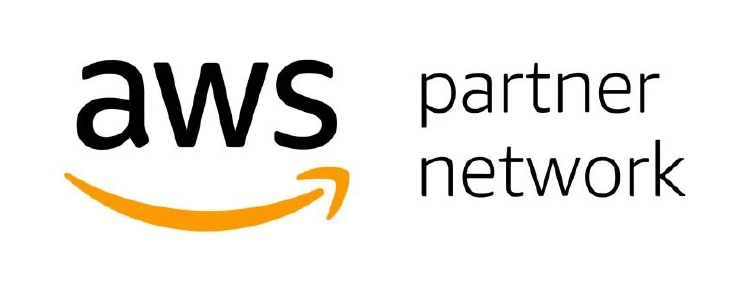
AWS Application Migration Services: When to Rehost, Replatform, or Modernize Legacy Applications
Manav Patel
AWS application migration services help organizations move applications from on-premise infrastructure, virtual machines, physical servers, or other cloud environments to AWS.
But application migration is not only about moving servers. Applications have dependencies, databases, integrations, security requirements, performance needs, and business users. If those details are missed, migration risk increases.
AWS Application Migration Service, also known as AWS MGN, is designed as a highly automated lift-and-shift solution for migrating applications to AWS. AWS states that it can replicate source servers into your AWS account and support migration of physical, virtual, or cloud servers.
That makes it useful for many rehost migrations. But rehost is not always the right answer for every application.
Quick Answer: What Are AWS Application Migration Services?
AWS application migration services include the assessment, planning, migration, testing, and optimization activities needed to move applications to AWS.
This may involve:
- Application discovery
- Server and dependency mapping
- AWS target architecture planning
- Rehosting applications
- Replatforming selected components
- Database migration
- Testing and validation
- Cutover and rollback planning
- Post-migration optimization
- Modernization roadmap creation
The best approach depends on the application’s business value, technical complexity, and future roadmap.
Rehost: When Lift-and-Shift Makes Sense
Rehosting means moving an application to AWS with minimal changes. It is often called lift-and-shift.
Rehost may be suitable when:
- The application is stable
- Downtime tolerance is limited
- The business needs faster data center exit
- The application does not need immediate modernization
- The team wants to reduce migration complexity
- The workload can be optimized after migration
This approach can help organizations move faster, especially when many servers need to be migrated. However, rehosting may also carry existing technical debt into AWS. That is why rehost should be treated as one possible strategy, not the default for everything.
Replatform: When Small Changes Create Better Cloud Value
Replatforming means making limited changes to improve cloud fit without fully rebuilding the application.
Examples include:
- Moving a self-managed database to Amazon RDS
- Replacing file storage with Amazon S3
- Using managed monitoring and logging
- Updating deployment pipelines
- Adjusting application configuration for AWS
- Improving backup and recovery design
Replatforming is useful when small changes can improve manageability, scalability, availability, or cost. It usually requires more planning than rehosting, but less effort than full refactoring.
Refactor or Modernize: When Legacy Systems Need Deeper Change
Refactoring or re-architecting involves making significant changes to the application.
This may be needed when:
- The application is difficult to maintain
- The architecture limits scalability
- Release cycles are slow
- The codebase has high technical debt
- The business needs new digital capabilities
- The application must support APIs, analytics, or AI use cases
- The current architecture creates operational risk
Modernization may include microservices, containers, serverless architecture, event-driven design, managed databases, DevOps automation, or API-led integration. This approach is more complex, but it can create stronger long-term business value.
How to Decide the Right Migration Path
Use a workload-by-workload decision model.
|
Question
|
What It Helps Decide
|
|---|---|
|
Is the application business-critical?
|
Migration priority and risk control
|
|
Is the architecture stable?
|
Rehost vs replatform vs refactor
|
|
Are there major dependencies?
|
Wave planning
|
|
Is downtime acceptable?
|
Cutover strategy
|
|
Is the database complex?
|
Data migration approach
|
|
Is the application near end-of-life?
|
Retain, retire, or replace
|
|
Is modernization needed soon?
|
Replatform or refactor roadmap
|
The right migration strategy should be based on technical reality and business priority.
Common Application Migration Risks
Application migration can fail or slow down when teams miss:
- Hidden dependencies
- Hardcoded configurations
- Legacy operating systems
- Unsupported software versions
- Database compatibility issues
- Licensing constraints
- Performance assumptions
- Weak testing coverage
- Missing rollback plans
- Poor user acceptance validation
This is why application-aware planning matters. Migrating the server is only one part of the work.
Where AWS Application Migration Service Fits
AWS Application Migration Service can help automate and simplify rehost migration by replicating source servers and supporting cutover to AWS.
It is especially relevant for:
- Physical server migration
- Virtual machine migration
- Large-scale lift-and-shift migration
- Data center exit programs
- Faster migration of compatible workloads
But organizations still need readiness assessment, dependency mapping, landing zone planning, testing, rollback planning, and post-migration optimization.
Tools support migration. Strategy controls risk.
How AIMDek Helps With Application Migration to AWS
AIMDek helps organizations plan and execute application migration to AWS with a focus on risk, continuity, and modernization readiness.
Support can include:
- Support can include:
- Dependency mapping
- Migration strategy selection
- Server and VM migration planning
- Database migration coordination
- AWS target architecture
- Testing and rollback planning
- Security and governance alignment
- Post-migration optimization
- Modernization roadmap planning
How AIMDek Supports Moving to AWS Cloud
AIMDek helps organizations assess, plan, and migrate workloads to AWS through a phased approach focused on business continuity, security, governance, cost visibility, and modernization readiness.
The goal is not only to move infrastructure. The goal is to help you move with control.
If you are evaluating migration from on-premise to AWS, start with an AWS Migration Readiness Call.

Manav Patel
Manav Patel is an experienced Cloud and Infrastructure Consultant specializing in cloud architecture, infrastructure modernization, platform migration, DevOps automation, and enterprise system reliability. He has extensive experience in designing and deploying scalable, secure, and highly available cloud-native environments across cloud and microservices ecosystems using technologies such as Kubernetes, AWS, Infrastructure as Code (Terraform & Cloud formation), containerization, CI/CD automation, and enterprise monitoring solutions.
FAQs
What are AWS application migration services?
AWS application migration services help organizations assess, plan, move, test, and optimize applications when migrating to AWS.
What is AWS Application Migration Service?
AWS Application Migration Service, or AWS MGN, is an AWS service for automated lift-and-shift migration of applications and servers to AWS
Should legacy applications be rehosted or modernized?
It depends. Stable applications may be rehosted first. Applications with scalability, maintainability, or performance issues may need replatforming or modernization.
What is the main risk in application migration?
The main risk is missing dependencies between applications, databases, integrations, users, and infrastructure.