How Grocery Delivery App Development Become A Norm In The Race Of Mobilization?
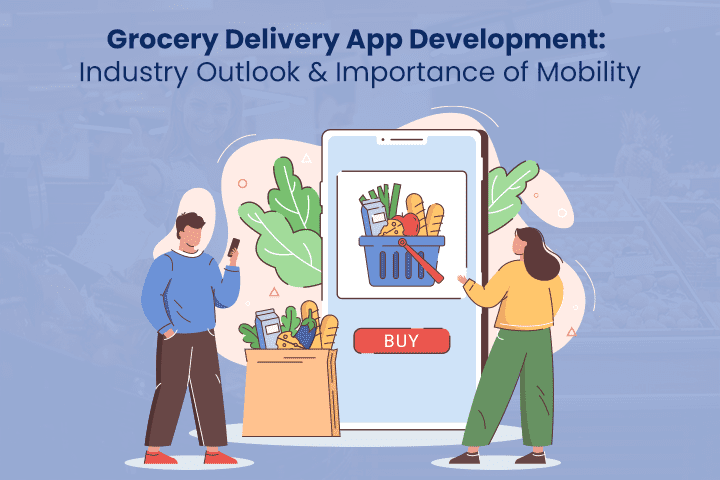
How Grocery Delivery App Development Become A Norm In The Race Of Mobilization? Avakash Dekavadiya It’s well-said that opportunities are hidden in plain sight. The latest pandemic is the best instance for the grocery industry that gets a sudden boost when most of the stores go out of business or experience a halt in production or supply chain. This is the time of the decade when most grocery stores were convinced to join the mobile app development race to easily accommodate the changing shopping patterns of the people. Now, life is presumed to pre-pandemic levels, but mobile grocery ordering become a new norm, which is here to stay. The amazing growth of Instacart, Walmart, Shipt, and other mobile grocery stores have geared up other players in the industry to raise a toast to success with mobile application development. A couple of grocery app development trends that confirm the facts The On-demand Grocery App Development Solutions has become a need of the hour. The global grocery retail market size was valued at $11,324.4 billion in 2021 and is expected to grow at a CAGR of 3.0% from 2022 to 2030. According to an omnichannel grocery study conducted in the USA, “26% of shoppers surveyed, or 6% of all consumers, say they have been placing online grocery orders more than once a month.” As mobile use grows by 14% every year, the eGrocery retailers are complementing the online presence with mobile app development to evolve with customers’ needs and shopping behavior. Looking at the changing trends, smart grocers are winning by leveraging technology to blur the line between physical and online grocery shopping in the retail setting that their target audience is expecting the least. Business models of grocery delivery application Grocery delivery app Grocery stores that want to adapt to the shift to mobile ordering are favoring launching the grocery delivery app development solution that facilitates browsing, ordering, and getting products shipped at the preferred time and place right from the mobile. In-store grocery app The in-store grocery app gives a feel of the grocery store virtually with images resembling the grocery store ambiance. It displays all the categories of grocery products along with their details that help users know about product quality. Also, the notifications are sent to the users when any discount is offered or new products arrived. Personalized grocery app The personalized grocery app aims to improve the grocery shopping experience by allowing them to create and share the shopping list online with the physical grocery store and collect it from the store at the time they need it. Aggregator apps The entrepreneur can get created a platform that allows different grocers worldwide to upload the offerings and sell them in return for a certain amount. The grocers need to pay subscription fees and a cut from every transaction that occurs through a platform just like- Amazon. Top 5 business benefits of Grocery delivery app Development The grocery stores are partnering with the mobile app development company to mobilize the business services to not only step in with users’ trends but reap a lot of advantages in return. Streamline inventory and order management The stores can effectively manage the inventory with mobile application development as it provides them with all the details on a single dashboard without much ado. Also, they get alerts for the products that are low on stock and need to replenish according to their requirements. Tracking the orders allows them to identify the future requirements as per the season or occasion. Upscale store services When you are running a local grocery store, then teaming up with a mobile app development company helps you expand the reach at a wider scale at competitive rates. Personalized marketing Traditionally, marketing expenses are quite high and they cannot be reused at a later stage. With grocery mobile app development, the store can easily recognize the individual’s preferences and behavior in grocery shopping which helps in sending them marketing messages to them accordingly. Personalized marketing improves sales and loyalty. Keep up with the competition It’s vital to make the grocery business available on mobile because your competition is already doing. Otherwise, the existing users take no time to turn to the competition. The mobile app services help them to be available where the users are searching for them. Provide more alternatives at one-stop The mobile grocery app makes the product and its details available to view right through mobile so that the users have more alternatives to browse and buy the product, which enhances their experiences. The advanced features that differentiate your grocery app in the crowd To gain a strong foothold in the market, it’s essential to integrate or build advanced functionalities in the grocery mobile app development that becomes USP. Enable spending tracking A big part of expenditure goes into grocery shopping which makes it important for people to buy groceries judiciously. The grocery mobile app development solution must recommend strategies to minimize grocery expenditure and facilitate a spending chart that gives an overview of spending in the last few months. Effortless list sharing Many times, the users want to get cross-checked the grocery items list with their family members. That’s where they expect the mobile application development solution must allow them to seamlessly share the grocery list for informed decision making. Shopping list reminders The users create the shopping list and forgot to buy them. This mistake puts them in trouble when a product goes out of stock. The built-in reminders that users can set by themselves for reminding them for shopping or the AI integration can automatically remind the users of shopping items based on their buying history assessment. Convenient payment Mobile grocery shopping has already busted the long queues at the stores. The multiple payment methods facilitated by the mobile app development company will help users to checkout quickly by making the payment they want Barcode scanners The barcode scanner is the next-gen trick to allow users to get all the information related to the product on their mobile screen just by scanning the bare code
React Vs Angular: Which Is A Best Fit For Your Business Project?
React Vs Angular: Which Is A Best Fit For Your Business Project? Avakash Dekavadiya This is the real story of every developer building web apps or front-end. With the myriad of options available in the form of JS frameworks, it’s confusing to choose the right JS framework that meets the business-specific project requirements along with critical aspects. It’s difficult to get out of this struggle. The tug of the war between the two frontend frameworks- Angular and React is a real struggle. Picking up one and placing a bet on one of these frameworks is a daunting task when clients ask for the best option to select. If you are also one of those entrepreneurs, we recommend you connect with web app development experts that provide the right decision based on your project details. The extensive expertise and experience of our developers in trying their hands on both frameworks enabled us to shed light on the comparison of these two frontend frameworks- Angular and React. Before getting into the depth of their differences, we will first understand what’s Angular and React frameworks. What is React.JS? The frontend JS library was developed by Facebook to build excellent UI. Leveraging declarative programming style, React determine UI state and enable developers to preview how the app will look and user interaction. In addition to reusable library code, the JSX and virtual DOM in React makes it a great fit for native-rendered, mobile app, and web app development. The open-source nature of the framework enabled businesses to use React libraries to build UI from the ground. The modularity and coherent nature of components make React highly reusable that increases the development time. Netflix, New York Times, and others have migrated to React for high-performance and other impressive features. What is Angular.JS? Since 2010, the Angular framework is developed and maintained by Google with continuous upgrades. Since the release of Angular 2 in 2016, the umbrella term Angular 2 is used for all the Angular updated versions from Angular 2 to Angular 10. It’s built on top of TypeScript to create web apps, hybrid apps, and single-page web apps. With support for MVC architecture, Ajax, HTTP, and Observables, the framework is the best fit for dynamic web app development. Forbes, Samsung forward, BMW, and Microsoft Office home projects are built using the Angular framework. Hire Frontend Developers Contact The one-to-one comparison between React vs. Angular to know the best of both worlds Performance React and Angular are good frontend frameworks that deliver the best performance for web and mobile development. However, React uses virtual DOM to update the change without rewriting the complete HTML document. Thereby rendering update gets speed up, which in turn, ensures fast performance regardless of app type and size. Angular operates on real DOM to access and change document content, layout, and others. The problem with real DOM is- for updating a little data, the tree structure of HTML tables gets updated unless it reaches the data that needs to alter. Angular copes up with performance lagging with code practices optimization that enable the Angular app to deliver good performance. Angular provides $cacheFactory to recalculate the data that needs to calculate at a later stage, which works best for memorization. That’s why PayPal’s payment gateway leverages Angular to handle more than 300 million transactions across the world. Component architecture React framework builds user interface by breaking web app UI development into components. At first, the components are built that self-manage their respective states and then structured together for complex UI engineering. Also, Redux, Babel, and Webpack are some of the tool integrations are required for component architecture creation. The Angular ecosystem has an array of features such as Angular CLI, Angular Universal, and RxJS that build an architecture plain-sailing without any outside help. Data binding Syncing data between UI and business logic is referred to as data binding. React uses one-way data binding wherein nesting of child component with high-order parent component is done, which makes debugging easier and code stable. Heavy parsing tasks and enormous data manipulation are managed by React leveraging one-way data binding in conjunction with two-way data helpers. On the other hand, Angular leverages both one-way and two-way data binding that updates two layers with the same data. The model layer gets updated as soon as the input data changes in the backend. The binding of the HTML element with the model variable helps in crafting interactive UI with no callbacks or developers’ efforts intervention. The bi-directional nature of Angular with two-way data binding makes it easier for enterprises to obtain data from ERP software like- accounting, finance, medical, and other software. Bundle file optimization Businesses that team up with web application development partners expect high loading speed to improve click-through rates. It’s a bundle file that’s downloaded at the initial page, which is if optimized, the page gets loaded quickly. Bundle file size matters a ton in the case of large-sized web or mobile apps as it impacts performance. Angular handles single-page web application development easily. The framework leverages the compiler to create an understanding between the code in the bundle file and the browser, which speeds up compiling process. However, the HTML code written in components extends the bundle size that interferes with performance. That’s where the Ahead-of-time compiler helps a ton, which is activated through CLI. React uses WebPack to break your code into smaller parts, dynamic import loads only required code, and tree shaking to remove unused modules for reducing bundle file size. Code quality Angular CLI, Angular Material, Angular Core, and other tools allow developers to build and deliver the project with quality code. It also helps in predicting compilation behavior that enables creating builds smoothly and minimizing iterating efforts, which ultimately results in quality code. React is different from other frameworks in the sense of code review practices provided by Linters. Following a set of rules strictly, Linters generate the same code practices that keep the codebase consistent, which, in turn, improves the code
Why Should You Choose Hybrid Mobile App Development Over Native?
Why Should You Choose Hybrid Mobile App Development Over Native? Avakash Dekavadiya Did you know that users spend more than 90% of smartphone time on different apps? In fact, an average person would check their phones every 10 minutes. Aren’t these numbers striking? We are sure that you are already mapping the importance of mobile apps in this era. Today, there are two major models used to develop state-of-art mobile apps: hybrid development and native development. Both native and hybrid app development methods have a huge user base. However, even with all this popularity, we need to make an informed choice. In mobile app development, our success is a product of the decisions we make. Hence, we have discussed the differences between hybrid and native app development. Native Mobile App Development Native mobile app development is a process of creating specific applications for different operating systems. For example, creating an iOS app and an Android app separately. Therefore, when you are using native mobile app development, you need to choose one operating system, such as: Android iOS It is necessary to remember that you need to create separate apps and upload them differently if you need both Android and iOS. Usually, you will find developers using Swift languages or Objective-C for iOS and Kotlin or JAVA for Android. Advantages of Native Mobile App Development Speed And Performance The main reason why many companies still use native mobile app development is that these are easy on the memory of the device. Therefore, the final speed and performance of native apps are better. However, this is not to say that hybrid applications are any less. You get various solutions to improve the speed and performance of these apps as well. User Experience And Functionality Since native mobile apps are for one specific OS, they can be better customized. It naturally makes sense to use this type of development for highly customized applications. This includes custom gestures, screens, custom navigation, intuitive mas, and common buttons like search, etc. Native apps also help sync and manage the aspect ratio, which offers improved app graphics. Easier Development Process When you experience bugs in an application, your team may have to spend time eliminating these issues during the development phase. However, an on-premise application has fewer issues, as it is not relying on different cross-platform software like Cordova. You can complete the development process early. Disadvantages of Native Mobile App Development There Is No Flexibility It is widely believed that native application development is not flexible. The process requires your team to create the code for a single platform and use a different tech stack for the other. This is why companies using native mobile app development hire different teams, which offers them tailored and detailed results. Development Is More Expensive During native app development, you can save time in fixing issues, but the entire mobile app development is expensive and complicated. You may choose a physical model, and the hourly wages would cost you too much. Additionally, you have to also consider the cost of local development, increase in developer pricing/salary, and maintenance of the app. From development to upgrades, native app development requires both more money and time. Not Suitable For Start-Ups As we have already discussed, native app development is not flexible, it requires more time and money, this type of model is not suitable for start-ups or small businesses. Both affordability and flexibility levels of native apps don’t align with the requirements of a start-up. Hybrid Mobile App Development Hybrid mobile app development helps you use one token for different operating systems, such as Android and iOS. It provides a blend of web features and native app functionalities. Any business that is looking to expand its functioning and business operations can use native app development to run one app on different operating systems. This helps engage users in a unified manner regardless of the platform being used. Benefits Of Hybrid App Development: Difference Between Hybrid and Native Apps Enhanced UX/UI Hybrid mobile app development offers the benefits of both web and native apps. This means you get a flawless and consistent user experience across both Android and iOS. Hybrid apps have a lightweight UI that ensures smooth graphic and content loading. Your apps also adjust to different screen sizes quickly, offering smooth data flow as well. Overall, hybrid apps create an advanced user experience that increases your chances of getting the app approved in respective app stores. Wider Market Access Hybrid apps are just perfect when you need to offer solutions for different platforms. We are operating in a competitive landscape, and here if you need to connect with a large user base, hybrid apps are cost-effective and comprehensively profitable for the business. Shorter Development Timeframe There’s no doubt that hybrid apps can be developed faster. There’s just one code base for different operating systems, which is why hybrid apps have a shorter timeframe for development. It is also amazing that you can use your web tools to eliminate making a different database for every platform. Just use HTML or JavaScript to create an application for every platform. Easy to Maintain With hybrid development, you get seamless maintenance. In native apps, your team needs to release and manage different upgraded versions of the app for every specific platform. Hybrid apps allow easy maintenance by eliminating versioning and updating apps in real-time. Cost-effective It is obvious that hybrid mobile app development is cost-effective, as you are using the same app for different platforms. In native applications, your mobile app development services may incur a higher charge. But, hybrid apps are also published and created quickly, which additionally saves you money. Performance boost Hybrid applications are not behind in the performance race too. Similar to native applications, hybrid apps also allow quick loading and improved performances. These apps don’t rely on the network connection, which offers better performance overall. Conclusion Whether you want to develop a native or hybrid application for your organization, evaluate your business
Checklist: 9 Steps To Create A Successful Mobile App

Checklist: 9 Steps To Create A Successful Mobile App Avakash Dekavadiya Mobile apps are becoming the most popular nowadays because of growing use of smartphones. People use mobile apps for all their daily activities like shopping, fitness tracking, online banking, etc. Hence mobile app development companies are becoming very popular. Entrepreneurs might commit some errors building their very first mobile application. So, here are some important details to consider while building your first mobile app to compete in the modern market. 1. Market Research Research is of utmost importance in every stage of mobile app development. Getting relevant details and taking care of what the user needs would aid in the development of an app that is useful, unique, and popular with the masses. Continuous tests to understand the suitability of the apps, paying attention to detail, staying updated with what the end-user wants and detailed analysis of the market would be good ways to ensure that your app hits the right note in the market. It is the research which ensures that the path towards success is a smooth one. Always remember that the market is flooded with apps and what you are unable to provide, some other app will and take your market share. To meet these gaps, research is the only tool to create an impact that is required. Tablets and smartphones are acting as connecting hubs for important facets of our daily life, work-related communications, relationships, on-the-go shopping, information searches, management news, etc. It is not restricted to only our business world but has completely engulfed our personal lives as well. To reach the greatest number of users and devising ways to keep them hooked can only be done through market research and therefore, its growing relevance in the market. 2. Target Audience In order to create an app that people are going to use, want, and need, you need to discover what that specific audience is lacking, what’s their requirements. The very first step is going to be defining the audience you want to appeal to i.e. your niche audience. The size of your target audience is ultimately up to you, can be anything according to your business and client needs. You may decide that you want to target a smaller audience to appeal to a more direct group of people. This is called a micro-niche market. An audience like this could be a group of young adults who like art, towards the more creative field. A larger niche, called a broad niche, would appeal to more people. Identifying the target audience is the most important aspect while developing mobile apps. If you target the audience properly, it will be easy for you to create user friendly UI/UX. For this monetize your app before starting any development process. Monetization means setting a revenue model, with which your app will be stayed up with and useful for your targeted entrepreneurs. 3. Design App Mobile app users like applications that are easy to use and more engaging. The most successful applications like WhatsApp have relentlessly offered their users seamless navigation and an attractive interface. Developing an application that has an efficient Ul/UX design is the starting point of having a successful application. This is because most app users prefer an app that is visually appealing and user-friendly over one that has great functionality but with a less attractive appearance. A great interface gives users a realistic feel when using your app with a continuous flow of valuable information which ultimately leads to your goal i.e. conversion It is therefore essential to hire an experienced UI/UX designer who will make sure your mobile app is interactive and pleasant to your users. 4. Choose between Native, Cross-Platform and Hybrid Before we deep dive into development you should figure out how you want to develop your app, which technology you want to use and other factors deciding that are essential. You can have 3 options to develop mobile apps. A native application is a software developed to use on a particular platform or device. Native Android apps are developed and supported by Google, using programming languages such as Kotlin and Java. Native iOS apps are developed and supported by Apple, using Swift and Objective-C. Cross-platform app development frameworks allow developers to create mobile applications that are compatible with more than one operating system, in this case, iOS and Android. It provides them with the ability to write the code once, and then run it anywhere for other platforms too, thereby enabling them to release a product/software faster, safer, and with better quality. Hybrid apps, like native apps, run on the device, and are written with web technologies (HTML5, CSS and JavaScript). Hybrid apps run inside a native container, and leverage the device’s browser engine (but not the browser) to render the HTML and process the JavaScript locally. A web-to-native abstraction layer enables access to device capabilities that are not accessible in Mobile Web applications, such as the accelerometer, camera and local storage. All have their own pros and cons. It’s totally up to you to choose the preferred technology. The main advantage of using cross-platform and Hybrid technology is that it reduces the cost of development. 5. Fast development To develop an app with a lot of features is a big time taking task and your app idea becomes outdated. For this reason, one should release the basic version first and later on can add advanced features. 6. Integrate Analytics tool Mobile analytics is an integral part of any mobile software development life cycle. Embracing analytics tools will help mobile app developers in making data-driven judgments about user experience, design as well as content. Mobile analytics comes handy when it comes to sharing information and knowledge and has the capacity to reduce app vulnerabilities and transform the way users interact with apps. This data will include the total number of visitors, app installations, sessions retention, and the medium through which the user landed on the apps page. Here are some of the best analytics tools that
How the Left and the Right Brain Work in Mobile App Design?
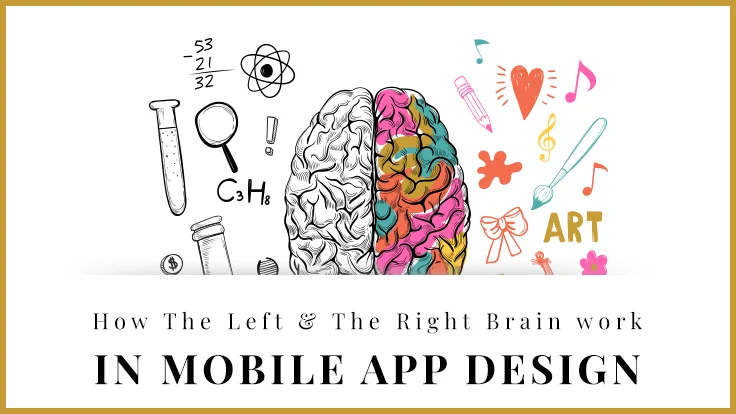
How the Left and the Right Brain Work in Mobile App Design? Avakash Dekavadiya “Welcome to the human brain, the cathedral of complexity.”—Peter Coveney Brain-science and psychology play a vital role in a user’ experience (UX) with the mobile application. There are several characteristics that the brain-science has put together with every single hemisphere of the human brain. It is no more a secret that human brains are skilled in two distinct types of thinking. While the “left brain” is believed to be objective, focusing on logic and analytics; the “right brain” is increasingly subjective, often triggered with look and feel of your design. By having a better understanding of how the mobile app designs are perceived, the designers can make modifications; to make the apps more effective. Some designs demand you to think out of the box. They ask for exceptionally creative, original design that shoots it to fame and fortune. Others are humbly looking for a simpler way to exhibit some information. Creativity can be chaos, analytical problem solving can be monotonous. One cannot create a great user experience focusing only on one brain. It is when they come together that a truly exceptional design and user experience is created. Here is why. The left brain inspects the objective and basic aspects of your design. This way people will find adequate and thorough information on your mobile app, and that in a clear and structured way. However, they would visit your app, find what they are looking for, and leave. That’s it. No detours and frustrations. But at the same time, no engagement either. In order to connect with your users and to cater for a positive and engaging experience, one needs to use their right brain. This will help you make your designs personal, engaging, fun, special and exceptional. In a word: make your design emotional. Let us take a look at how UX designers use their left and the right brain to think in designing a mobile app. At AIMDek, we toil hard to craft exquisite functional B2B applications with clean, intuitive, expandable and friendly UI/UX designs. We just don’t build mobile apps but create top-notch mobile experiences with our end-to-end mobile application development services for consumer-facing and commercial environments. skip render: ucaddon_next_prev_post
Key Metrics that Matter for your Mobile App Success

Key Metrics that Matter for your Mobile App Success Avakash Dekavadiya Capitalizing on your returns in the mobile app business can be mind-boggling. The competition is fierce with most of the mobile apps flopping shortly after launch. While having a splendid mobile app and a slaying mobile app marketing strategy will not assure success, it is going to prove to be a good start. On this blog we will discuss Key Metrics that Matter for your Mobile App Success. To withstand your momentum and feed your mobile app’s growth, aim your attention towards mobile app performance tracking. This comprehensive approach is the only thing that will empower you to constantly make modifications that lead to wins. Knowing what to modify is the kingpin of time and again pivoting your app in a precise direction.Looking at the changing nature of the mobile app ecosystem, what type of metrics should mobile app developers be focusing on these days? Previously, mobile app developers were chiefly focused on a single metric: They wanted their app to rank high on App Store. With enormous data accumulated by third-party app-intelligence platforms like App Annie and other mobile analytics providers, mobile app developers have commenced to plunge deeper into their apps’ data to inspect frequency of use, duration, loyalty and much more. While accumulating data is vital, interpretation and appropriate application of outcomes are what’s even more significant. It is a complex process, but it can be understood. We’ve fragmented 28 of the most useful mobile app metrics into categories like user engagement, customer satisfaction, customer acquisition and mobile app performance. With the right metrics in place, spotting problem areas and solutions will become simple and upfront.MOBILE APP METRICS FOR APP-USER ENGAGEMENT Although gaining new users is great, retaining engaged users is always better. Several studies validate a strong link between engaged users and revenue growth. This section envelops the key metrics you need to gauge how engaged your users are with your mobile app. These metrics will convey the number of users who installed and use your app, how often a user interacts with your app along with the probability of converting an occasional user into a daily user and if your users are abandoning your app for better. App downloads One should always be aware of the number of people who have installed your app. However, this is metric alone wouldn’t be able to convey about the real success of your mobile app. What if users download your app because of some specific marketing campaign or may never use it? Or uninstalled it right away? The number of mobile app installs is crucial since it lays the foundation for all other metrics you must track and analyze. Active users of your app Not everyone who downloads your mobile app can be categorized as active users. Active users are the ones who regularly open and engage with your app. This metric is crucial for it demonstrates how engaging and useful your mobile app is to users. So, what categorizes a user as ‘active’? It all entirely depends on the analytics tool you use. According to Google Analytics, an active user is the one who has logged in and interacted with a mobile app within the last 30 days. App stickiness ratio displays how often users come back to your mobile app Average visit time and Screen views per visit Average visit time conveys the average duration of your app users’ sessions. Screen views per visit trace the number of app screen that a user interacts with during a single session. Both the parameters enlighten how engaged your active users are with your mobile app. In short, the longer time your users spend on your mobile app and the number of screens they interact with per visit the more engaged your users are. This is where creating an experience rather than focusing just on features will help you[ App session intervals Mobile app session intervals gauge the frequency of your users returning to your mobile app. Session intervals calculate the time between a users’ sessions. This is yet another way to identify the engagement of your users. It is usually better to have shorter session intervals which would further mean that the users aren’t waiting very long between using your app. The trick to improving your session intervals metric is to try to make your app part of your users’ routines. Give them a reason to interact with your app every day App retention The retention game begins once you have convinced a potential user to download and launch your app. App retention simply calculates the number of users you retain after a set period of time. People get bored with things easily. Retaining app users over time poses to be the greatest challenges on your journey to app success. This app metric can be helpful if you are planning a new update release or implement new features. It can help you identify if the new updates/features are keeping users engaged or are driving them away. To help diagnose why users aren’t returning to your app, measure your retention rate over a daily, weekly, and monthly period App churn Even the top-notch apps fail to retain all of their users, with most mobile app owners dropping 80% of new users in the first 90 days. While not the most pleasant metric to analyze, it is a crucial one to track. Churn is a companion metric to retention as it measures the percentage of users who stop using your app. If you discover that the uninstall rate of your mobile app to be peculiarly high, it should be a red flag and a reason to act immediately to prevent losing the rest of your user base. Bugs, crashes, battery drainage and other performance flaws can be the possible culprits in this case. A solid re-engagement strategy like retargeting ads, surveys, discounts and exclusives can help you win back lost users. App event tracking App event tracking examines how